Menu


Hot-Topics
March 12, 2026 | SCOTUS Rejects Delaware Affidavit of Merit Requirement
Tag: Freedom of Religion

Ware v Hylton: Supreme Court Power to Invalidate State Laws
Ware v Hylton: Supreme Court Power to Invalidate State Laws In Ware v. Hylton, 3 U.S. (3 Dall.) 199 (1796), the U.S. Supreme Court held that the federal courts are authorized to determine the constitutionality of state laws. The Court subsequently h...

Abood v. Detroit Board of Education: Public Unions, “Agency Shop” and the First Amendment
In Abood v. Detroit Board of Education, 431 U.S. 209 (1977), the U.S. Supreme Court held that the First Amendment to the U.S. Constitution does not prohibit governments from requiring non-union public employees to pay their “fair share” of dues f...
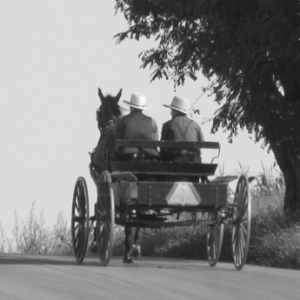
Wisconsin v. Yoder: Compulsory Education Violates First Amendment
In Wisconsin v. Yoder, 406 U.S. 205 (1972), the U.S. Supreme Court held that a Wisconsin law mandating that children attend school violated the First Amendment. In the landmark decision, the unanimous Court held that the parents’ Freedom of Religio...
Previous Articles
Supreme Court Holds Candidate Can Challenge Election Law Governing Vote Counting
by DONALD SCARINCI on March 6, 2026
In Bost v. Illinois State Board of Elections, 607 U.S. ___ (2026), the U.S. Supreme Court held that...
Supreme Court Hold Ex Post Facto Clause Applies to Criminal Restitution Statute
by DONALD SCARINCI on
In Ellingburg v. United States, 607 U.S. ____ (2026), the U.S. Supreme Court unanimously heldthat t...
SCOTUS Reaffirms Fourth Amendment Standard for Police Responding to Household Emergencies
by DONALD SCARINCI on February 19, 2026
In Case v. Montana, 607 U.S. ____ (2026), the U.S. Supreme Court confirmed thatthe Fourth Amendment...