
Early Life and Background
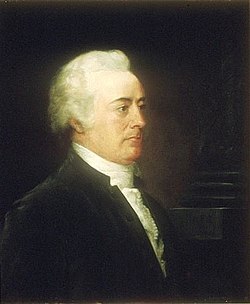
Born in Charleston, South Carolina, in September 1739, John Rutledge was the eldest son of Dr. John Rutledge, an Irish immigrant of Scots descent. He received his early education in Charleston before studying law at the Middle Temple in London, where he was called to the English bar in 1760. Upon returning home, Rutledge became a prominent colonial lawyer and a successful rice planter.
Rutledge entered the Commons House of Assembly in 1761, quickly establishing himself as a populist leader. He strongly opposed British policies such as the Stamp Act (1765), the Townshend Acts (1767), and the Tea Act (1773). He served in both the First (1774) and Second Continental Congresses (1775–76) and was instrumental in drafting South Carolina’s 1776 state constitution. He was elected as the state’s first President (the title for governor under that constitution) and later served as Governor under the revised 1778 constitution during the Revolutionary War.
Constitutional Convention
At the Philadelphia Convention of 1787, Rutledge chaired the Committee of Detail, which was responsible for preparing the first full draft of the United States Constitution. He was a strong advocate for a more powerful central government, property-based representation, and protections for slavery, aligning with the interests of Southern planters. On September 17, 1787, Rutledge signed the Constitution as one of South Carolina’s five delegates.
Later Public Service and Legacy
Following ratification of the Constitution, Rutledge served as a presidential elector for George Washington in the 1789 election. Washington appointed him as an Associate Justice of the U.S. Supreme Court in 1789, a position he held until 1791, when he resigned to become Chief Justice of the South Carolina Court of Common Pleas and Sessions.
In 1795, after the resignation of Chief Justice John Jay, President Washington gave Rutledge a recess appointment as Chief Justice of the United States. However, his nomination was rejected by the U.S. Senate in December 1795, partly due to his outspoken opposition to the Jay Treaty and concerns over his mental health.
Rutledge withdrew from public life after the Senate rejection and died in Charleston on July 18, 1800, at the age of 60.