

Unanimous Supreme Court Rules Conviction Does Not Bar Prospective Constitutional Challenge
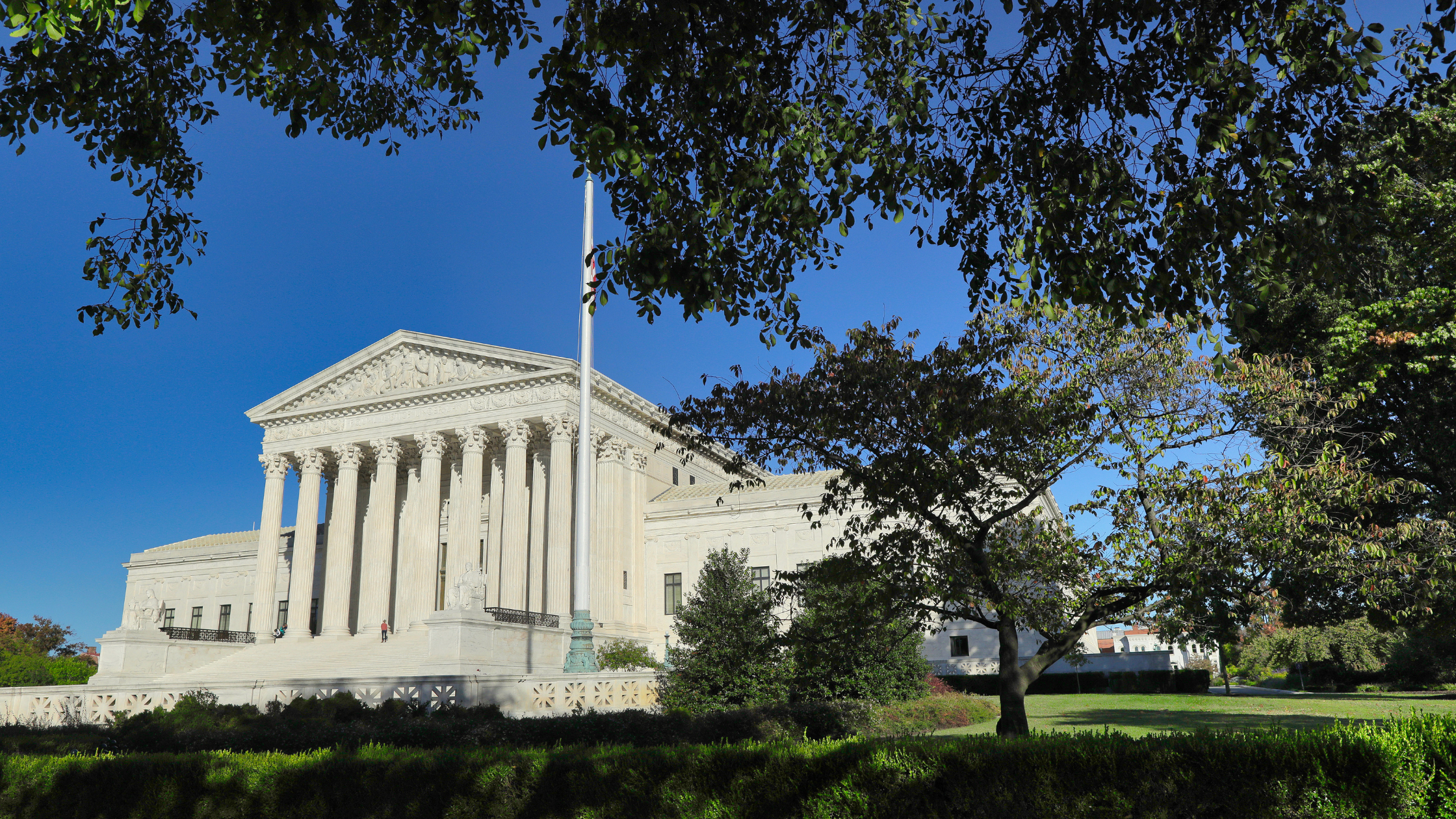
In Olivier v. City of Brandon, Mississippi, 607 U.S. ____ (2026), the U.S. Supreme Court held that individuals can challenge a law as unconstitutional and seek to prevent prospective enforcement, even if they have previously been convicted of violating the law. The Court’s decision was unanimous.
Facts of the Case
Petitioner Gabriel Olivier is a street preacher in Mississippi who believes that sharing his religious views with fellow citizens is an important part of exercising his faith. His vocation sometimes took him to the sidewalks near an amphitheater in the City of Brandon, where he could find sizable audiences attending events. In 2019, the City adopted an ordinance requiring all individuals or groups engaging in “protests” or “demonstrations,” at around the time events were scheduled, to stay within a “designated protest area.”
In 2021, Olivier was arrested for violating that ordinance. He pleaded no contest in municipal court. The court imposed a $304 fine, one year of probation, and 10 days of imprisonment to be served only if he violated the ordinance during his probation. Olivier did not appeal, paid the fine, and served no prison time.
Because he still wanted to preach near the amphitheater, Olivier filed suit against the City in federal court under 42 U.S.C. §1983, alleging that the city ordinance violates the Free Speech Clause of the First Amendment by consigning him and other speakers to the amphitheater’s protest area. His complaint sought a declaration that the ordinance infringes the First Amendment and an injunction preventing city officials from enforcing the ordinance in the future.
One of the key issues in the lower courts was whether this Court’s decision in Heck v. Humphrey, 512 U.S. 477 (1994)—which prohibits the use of §1983 to challenge the validity of a prior conviction or sentence so as to obtain release from custody or monetary damages—bars the suit from going forward. Citing Heck, the City argued that a person previously convicted of violating a statute can’t challenge its constitutionality under §1983 because success in the suit would cast doubt on the prior conviction’s correctness.
Meanwhile, Olivier maintained that Heck does not apply when a plaintiff seeks wholly prospective relief, rather than relief relating to the prior conviction. The District Court agreed with the City’s interpretation and found Olivier’s suit barred. The Court of Appeals for the Fifth Circuit affirmed.
Supreme Court’s Decision
The U.S. Supreme Court unanimously reversed. It held that Olivier’s suit can proceed, notwithstanding his prior conviction for violating the ordinance.“Heck prohibits the use of §1983 to challenge the validity of a prior conviction or sentence so as to obtain release from custody or monetary damages,” Justice Elena Kagan wrote on behalf of the Court. “That decision has no bearing on Olivier’s suit seeking a purely prospective remedy.”
In her opinion, Justice Kagan explained that there would have been no question regarding the validity of Olivier’s suit prior to the Court’s Heck decision because assuming a credible threat of prosecution, a plaintiff may bring a §1983 action to challenge a local law as violating the Constitution and to prevent that law’s future enforcement.
Moreover, in Wooley v. Maynard, 430 U.S. 705 (1977), the Court held that rule to apply even when the plaintiff was previously convicted under the challenged law. The Court explained that because the suit at issue sought “wholly prospective” relief—“only to be free from prosecutions for future violations”—and was “in no way designed to annul the results of a state trial,” §1983 provided an avenue for the plaintiff ’s claim.
Justice Kagan went on to discuss the Court’s decision in Heck. As she explained, the Court held that a state prisoner could not use §1983 to seek damages attributable to his allegedly unconstitutional conviction. The Court reasoned that such a suit in truth mounts a “collateral attack” on the validity of the conviction, and thus intrudes on the habeas statute’s domain.
Moreover, the Court determined that such a suit could lead to “parallel litigation” and “conflicting” judgments about the same conduct, with the §1983 suit suggesting that the plaintiff should be released even as criminal or habeas proceedings found the opposite.
The Court ultimately found that Olivier’s suit falls outside Heck’s concerns. In support, it noted that because Olivier’s suit does not, as habeas suits do, “collateral[ly] attack” the old conviction, it cannot give rise to “parallel litigation” respecting his prior conduct, and does not risk “conflicting” judgments over how that conduct was prosecuted or punished.
“The suit, after all, is not about what Olivier did in the past, and depends on no proof addressed to his prior conviction,” Justice Kagan explained. “Unlike in Heck, the suit merely attempts to prevent a future prosecution. So the Heck bar does not come into play.”
The Court also rejected the City’s reliance on one sentence in Heck that states: “[W]hen a state prisoner seeks damages in a §1983 suit, the district court must consider whether a judgment in favor of the plaintiff would necessarily imply the invalidity of his conviction or
sentence; if it would, the complaint must be dismissed.” Justice Kagan wrote:
We have to agree that if Olivier succeeds in this suit, it would mean his prior conviction was unconstitutional. So, strictly speaking, the Heck language fits. But that could just show that the phrasing was not quite as tailored as it should have been. This Court has often cautioned that “general language in judicial opinions should be read as referring in context to circumstances similar to the circumstances then before the Court and not referring to quite different circumstances that the Court was not then considering.”
Finally, the Court emphasized that both in the allegations made, and in the relief sought, the suit is entirely future oriented—even if success in it shows that something past should not have occurred. “Given that Olivier asked for only a forward-looking remedy—an injunction stopping officials from enforcing the city ordinance in the future—his suit can proceed, notwithstanding his prior conviction,” Justice Kagan wrote. “Heck, properly understood, does not say otherwise.
Previous Articles
Supreme Court Clarifies Constitutionality of Tax Foreclosure Sales
by DONALD SCARINCI on September 28, 2026
In Pung v. Isabella County, 609 U.S. ____ (2026), the U.S. Supreme Court held that the proper basel...
Supreme Court Closes Door on Judicially Created Claims Under Alien Tort Statute
by DONALD SCARINCI on September 21, 2026
In Cisco Systems, Inc. v. Doe, 609 U.S. ___ (2026), the U.S. Supreme Court ruled that federal cour...
US Supreme Court Upholds “Metering” Policy for Asylum Seekers
by DONALD SCARINCI on September 15, 2026
In Mullin v. Al Otro Lado, 609 U.S. ___ (2026), the U.S. Supreme Court held that an alien standing ...