
Constitutional Law Reporter
Award
Menu
  • Home
  • US Constitution
  • Supreme Court Cases
  • Justices
    • Chief Supreme Court Justices
    • Current Supreme Court Justices
    • Past US Supreme Court Justices
  • American Biographies
    • General
    • Presidents
    • Vice-Presidents
    • First Ladies
    • Signers of the U.S. Constitution
    • Signers of the Declaration of Independence
    • Delegates of the U.S. Constitution
    • Misc – Great American Bios
  • Articles
    • Current Cases
    • Historical Cases
    • Impeachment
  • Videos
  • Links
Hot-Topics

February 5, 2026 | SCOTUS Decision in Bowe v. United States Is First of the 2026 Term

A B C D E F G H I J K L M N O P Q R S T U V W X Y Z
<< Back

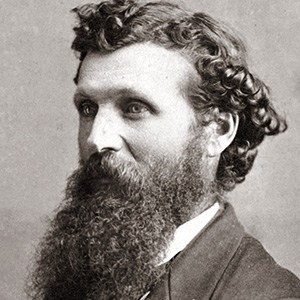
John Muir

John Muir

John Muir was one of the country’s first environmental activists. Among his longest lasting accomplishments, he founded the Sierra Club and helped establish Sequoia and Yosemite National Parks.

Early Life

Born in Scotland, Muir immigrated to the United States at the age of nine. After studying geology and botany at the University of Wisconsin, he set off to explore nature, chronicling his adventures and the landscape around him as he traveled. Muir walked from Indiana to Florida, and later sailed to California where he walked from San Francisco to the Sierra Nevada. Muir then spent time working in and exploring Yosemite Valley, where his observations resulted in a novel theory that the valley was created by glaciers.

Environmental Advocacy

As early as 1876, Muir began to publish articles advocating conservation. His detailed descriptions of nature, and man’s spiritual relationship to it, attracted a wide readership and resulted in the publication of his articles in prestigious magazines, such as Overland Monthly, Scribner’s and Harper’s Magazine. He also used the platform to lobby Congress to establish Yosemite National Park, which it did in 1890. Muir also played a prominent role in the establishment of Sequoia and General Grant National Parks.

In 1892, Muir founded the Sierra Club, which was dedicated to environmental advocacy and conservation. He served as the organization’s president until his death. He also used his considerable influence to shape public policy. In 1903, Muir famously embarked on a three-night camping trip with President Theodore Roosevelt. During their time in the wilderness, Muir convinced Roosevelt to place Yosemite Valley and the Mariposa Grove under federal protection as part of Yosemite National Park. The trip would further shape the President’s conservation policies.

Muir Woods National Monument

In recognition of his tremendous impact on America’s conservation history, Muir Woods National Monument, a grove of redwood trees in California, bear his name. John Muir Trail, a 211-mile hiking trail in the Sierra Nevada, was named in his honor


Previous Articles

SCOTUS Rules State Can’t Immunize Parties from Federal Civil Liability
by DONALD SCARINCI on January 29, 2026

In John Doe v. Dynamic Physical Therapy, LLC, 607 U.S. ____ (2025) the U.S. Supreme Court held that...

Read More
Supreme Court to Address Racial Discrimination in Jury Selection
by DONALD SCARINCI on

While the U.S. Supreme Court has concluded oral arguments for the year, it continues to add cases t...

Read More
Supreme Court Halts Deployment of National Guard to Chicago
by DONALD SCARINCI on

In Trump v. Illinois, 607 U.S. ____ (2025), the U.S. Supreme Court refused to stay a district court...

Read More
All Posts

The Amendments

  • Amendment1
    • Establishment ClauseFree Exercise Clause
    • Freedom of Speech
    • Freedoms of Press
    • Freedom of Assembly, and Petitition
    Read More
  • Amendment2
    • The Right to Bear Arms
    Read More
  • Amendment4
    • Unreasonable Searches and Seizures
    Read More
  • Amendment5
    • Due Process
    • Eminent Domain
    • Rights of Criminal Defendants
    Read More

Preamble to the Bill of Rights

Congress of the United States begun and held at the City of New-York, on Wednesday the fourth of March, one thousand seven hundred and eighty nine.

THE Conventions of a number of the States, having at the time of their adopting the Constitution, expressed a desire, in order to prevent misconstruction or abuse of its powers, that further declaratory and restrictive clauses should be added: And as extending the ground of public confidence in the Government, will best ensure the beneficent ends of its institution.

Read More

More Recent Posts

  • Supreme Court Clarifies Applicability of First Step Act to Vacated Sentences
  • SCOTUS Rules E-Cigarette Retailers Can Challenge FDA Order in Fifth Circuit
  • Supreme Court Expands Judicial Review of Agency Actions
  • Supreme Court Pauses Order Reinstating CPSC Commissioners

Constitutional Law Reporter Twitter

A Twitter List by S_H_Law

Constitutional Law Reporter RSS

donald scarinci constitutional law attorney

Editor

Donald Scarinci

Managing Partner

Scarinci Hollenbeck

(201) 806-3364

Awards


Follow me

© 2018 Scarinci Hollenbeck, LLC. All rights reserved.

Prior results do not guarantee a similar outcome. Attorney Advertising