
Constitutional Law Reporter
Award
Menu
  • Home
  • US Constitution
  • Supreme Court Cases
  • Justices
    • Chief Supreme Court Justices
    • Current Supreme Court Justices
    • Past US Supreme Court Justices
  • American Biographies
    • General
    • Presidents
    • Vice-Presidents
    • First Ladies
    • Signers of the U.S. Constitution
    • Signers of the Declaration of Independence
    • Delegates of the U.S. Constitution
    • Misc – Great American Bios
  • Articles
    • Current Cases
    • Historical Cases
    • Impeachment
  • Videos
  • Links
Hot-Topics

April 28, 2026 | Supreme Court Rules ISP Not Liable for Copyright Infringement

A B C D E F G H I J K L M N O P Q R S T U V W X Y Z
<< Back

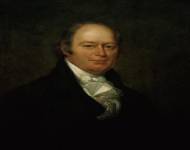
William Johnson

William Johnson

Early Life

William Johnson was born on December 27, 1771, near Charleston, South Carolina. Johnson earned high honors from Princeton University, graduating with a bachelor’s degree in 1790. Following graduation, he studied law at the office of Charles Cotesworth Pinckney and was admitted to the bar in 1793. Johnson married Sarah C. Bennett the following year.

Career

As a Democratic-Republican, Johnson was elected to the South Carolina State House of Representatives in 1794. He served on the house for three terms, the last of which as Speaker of the House, until 1798. At that time, with the formation of the state’s superior court, Johnson was appointed as a Justice on the South Carolina Court of General Sessions and Common Pleas.

Supreme Court

President Jefferson nominated Johnson to be a Justice on the United States Supreme Court in 1804 to fill the seat of Alfred Moore. He became the first Democratic-Republic Justice on the Supreme Court when he officially began his post on May 7, 1804.

During his time on the Supreme Court, Justice Johnson gained the reputation of voicing independent opinions from the rest of the court. Although Chief Justice John Marshall preferred all justices remain unified, Johnson often swayed from this precedent. Justice Johnson wrote nearly half of the total dissents during his thirty-year career on the Supreme Court.

Johnson’s first controversy as Justice came in the 1808 Gilchrist v. Collector of Charleston case regarding embargos on maritime trade. Despite that fact that Johnson typically held views in line with Jefferson’s, Justice Johnson defied Presidential orders when he allowed an illegal ship to set sail in Charleston. Although he initially defended his actions, likely under the desire to assert his independence, Johnson went on to admit his wrongdoing five years later.

Johnson became known for writing opinions that did not align with either the Federalists or the Democratic-Republicans, thus irritating members of both parties. The Federalists disliked his strict adherence to judicial authority, and the Democratic-Republicans bemoan about his commitment to states’ rights. Johnson believed that all government ought to serve the individual.

In the case of Ogden v. Saunders (1827), Chief Justice Marshall’s only dissent in a Constitutional decision, Johnson voted against Marshall and in favor of the majority opinion that a law passed before the execution of a future contract is a valid part of that contract.

In his later years on the Supreme Court, Johnson’s opinions began to differ with those of his home state of South Carolina. His denunciation of the Nullification Crisis in South Carolina in the early 1830s eventually provoked him to relocate to Pennsylvania. Johnson claimed this move would allow him to remain independent in his thinking and refrain from being swayed by South Carolina majority opinion.

Death

Justice Johnson served on the Supreme Court until his death on August 4, 1834. He died at the age of 62 after sustaining injuries from jaw surgery.

Notable Cases:

Gilchrist v. Collector of Charleston (1808)

Gibbons v. Ogden (1824)

Ogden v. Saunders (1827)

Holmes v. United States (1832)

Previous Articles

Unanimous Supreme Court Rules Conviction Does Not Bar Prospective Constitutional Challenge
by DONALD SCARINCI on April 22, 2026
Unanimous Supreme Court Rules Conviction Does Not Bar Prospective Constitutional Challenge

In Olivier v. City of Brandon, Mississippi, 607 U.S. ____ (2026), the U.S. Supreme Court held that...

Read More
Supreme Court Clarifies Standard of Review for Asylum Decisions
by DONALD SCARINCI on April 17, 2026
Supreme Court Clarifies Standard of Review for Asylum Decisions

In Urias-Orellana v. Bondi, 607 U.S. ____ (2026), the U.S. Supreme Court held that courts of appeal...

Read More
SCOTUS Rules Court Can Restrict Attorney-Client Discussions During Overnight Recess
by DONALD SCARINCI on April 15, 2026
SCOTUS Rules Court Can Restrict Attorney-Client Discussions During Overnight Recess

In Villarreal v. Texas,607 U.S. ____ (2026), the U.S. Supreme Court unanimously held that a qualifi...

Read More
All Posts

The Amendments

  • Amendment1
    • Establishment ClauseFree Exercise Clause
    • Freedom of Speech
    • Freedoms of Press
    • Freedom of Assembly, and Petitition
    Read More
  • Amendment2
    • The Right to Bear Arms
    Read More
  • Amendment4
    • Unreasonable Searches and Seizures
    Read More
  • Amendment5
    • Due Process
    • Eminent Domain
    • Rights of Criminal Defendants
    Read More

Preamble to the Bill of Rights

Congress of the United States begun and held at the City of New-York, on Wednesday the fourth of March, one thousand seven hundred and eighty nine.

THE Conventions of a number of the States, having at the time of their adopting the Constitution, expressed a desire, in order to prevent misconstruction or abuse of its powers, that further declaratory and restrictive clauses should be added: And as extending the ground of public confidence in the Government, will best ensure the beneficent ends of its institution.

Read More

More Recent Posts

  • Supreme Court Clarifies Applicability of First Step Act to Vacated Sentences
  • SCOTUS Rules E-Cigarette Retailers Can Challenge FDA Order in Fifth Circuit
  • Supreme Court Expands Judicial Review of Agency Actions
  • Supreme Court Pauses Order Reinstating CPSC Commissioners

Constitutional Law Reporter Twitter

A Twitter List by S_H_Law

Constitutional Law Reporter RSS

donald scarinci constitutional law attorney

Editor

Donald Scarinci

Managing Partner

Scarinci Hollenbeck

(201) 806-3364

Awards


Follow me

© 2018 Scarinci Hollenbeck, LLC. All rights reserved.

Prior results do not guarantee a similar outcome. Attorney Advertising