

Supreme Court Halts Deployment of National Guard to Chicago
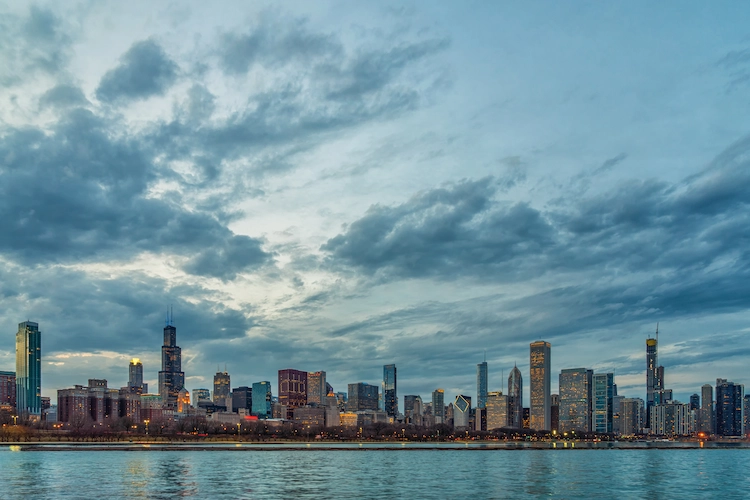
In Trump v. Illinois, 607 U.S. ____ (2025), the U.S. Supreme Court refused to stay a district court order preventing the Trump Administration from federalizing and deploying the National Guard within Illinois.
Facts of the Case
On October 4, 2025, President Donald Trump invoked his authority under 10 U.S.C. § 12406 to federalize and deploy members of the National Guard within Illinois, over the objection of the state’s Governor. The statute empowers the President to federalize members of the Guard if he is “unable with the regular forces to execute the laws of the United States.”
In calling for the Guard, President Trump asserted that deploying the Guard in the state was necessary to quell violent assaults against federal immigration agents and property. The State of Illinois and the City of Chicago subsequently filed suit against President Trump and members of his administration, arguing that none of the statutory predicates for federalizing the Guard under § 12406 had been met, and that the federalization also violated the Tenth Amendment and the Posse Comitatus Act, 18 U.S.C. § 1385.
U.S. District Judge April M. Perry issued an order that prohibited the federal government from “ordering the federalization and deployment of the National Guard of the United States within Illinois.” She found that neither of the predicate conditions for federalization proffered by the administration was present in Illinois: There was insufficient evidence of rebellion or a danger of a rebellion, 10 U.S.C. § 12406(2), nor was there sufficient evidence that the President was unable with the regular forces to execute the laws of the United States
“The agitators who have violated the law by attacking federal authorities have been arrested,” Judge Perry wrote. “The courts are open, and the marshals are ready to see that any sentences of imprisonment are carried out. Resort to the military to execute the laws is not called for.”
The Seventh Circuit Court of Appeals upheld the ruling. According to the appeals court, “[t]he spirited, sustained, and occasionally violent actions of demonstrators in protest of the federal government’s immigration policies and actions, without more, does not give rise to a danger of rebellion against the government’s authority.” The Seventh Circuit further found “insufficient evidence that protest activity in Illinois has significantly impeded the ability of federal officers to execute federal immigration laws.”
The Government asked the Supreme Court to stay the District Court’s order. The Court directed the parties to address an issue that their initial briefs had not: the meaning of the term “regular forces” in §12406(3). In its supplemental brief, the Government argued that the term refers to civilian law enforcement officers, such as those employed by Immigration and Customs Enforcement or the Federal Protective Service. Respondents, echoing the District Court, maintained that the term refers to the regular forces of the United States military.
Majority Ruling
By a vote of 6-3, the Supreme Court denied the Government’s application for a stay. “At this preliminary stage, the Government has failed to identify a source of authority that would allow the military to execute the laws in Illinois,” the Court wrote in a brief, unsigned opinion.
In reaching its decision, the Court concluded that the term “regular forces” in §12406(3) likely refers to the regular forces of the United States military. It went on to explain that this interpretation means that to call the Guard into active federal service under §12406(3), the President must be “unable” with the regular military “to execute the laws of the United States.” It wrote:
Because the statute requires an assessment of the military’s ability to execute the laws, it likely applies only where the military could legally execute the laws. Such circumstances are exceptional: Under the Posse Comitatus Act, the military is prohibited from “execut[ing] the laws” “except in cases and under circumstances expressly authorized by the Constitution or Act of Congress.” So before the President can federalize the Guard under §12406(3), he likely must have statutory or constitutional authority to execute the laws with the regular military and must be “unable” with those forces to perform that function.
Thus, at this stage of the case, the Court determined that the government has not carried its burden to show that §12406(3) permits the president to federalize the guard in the exercise of inherent authority to protect federal personnel and property in Illinois.
Dissent
Justices Samuel Alito Jr., Clarence Thomas and Neil Gorsuch dissented. “I have serious doubts about the correctness of the court’s views. And I strongly disagree with the manner in which the court has disposed of this application,” Justice Alito wrote. “There is no basis for rejecting the President’s determination that he was unable to execute the federal immigration laws using the civilian law enforcement resources at his command.”
Previous Articles
Supreme Court to Address Racial Discrimination in Jury Selection
by DONALD SCARINCI on January 13, 2026
While the U.S. Supreme Court has concluded oral arguments for the year, it continues to add cases t...
SCOTUS Agrees to Consider Merits of Birthright Citizenship Case
by DONALD SCARINCI on
On December 5, 2025, the U.S. Supreme Court agreed to review the constitutionality of one of Presid...
Supreme Court Allows Texas to Use Challenged Congressional Map
by DONALD SCARINCI on December 24, 2025
In Abbott v. League of United Latin American Citizens, 607 U.S. ____ (2025), the U.S. Supreme Court...