Menu


Hot-Topics
October 12, 2026 | Supreme Court Rules Prison Officials Can’t Face RLUIPA Suit
Category: Current

Supreme Court Rules Prison Officials Can’t Face RLUIPA Suit
In Landor v. Louisiana Department of Corrections and Public Safety, 609 U.S. ___ (2026), the U.S. Supreme Court held that prisoners can’t sue individual officers for monetary damages under the Religious Land Use and Institutionalized Persons Act (...

Supreme Court Clarifies Constitutionality of Tax Foreclosure Sales
In Pung v. Isabella County, 609 U.S. ____ (2026), the U.S. Supreme Court held that the proper baseline for measuring “just compensation” following a fairly conducted tax sale is the auction sale price, not the property’s hypothetical fair mark...

Supreme Court Closes Door on Judicially Created Claims Under Alien Tort Statute
In Cisco Systems, Inc. v. Doe, 609 U.S. ___ (2026), the U.S. Supreme Court ruled that federal courts can’t create new causes of action under the Alien Tort Statute (ATS). It further held that neither the ATS nor the Torture Victim Protection Act ...

US Supreme Court Upholds “Metering” Policy for Asylum Seekers
In Mullin v. Al Otro Lado, 609 U.S. ___ (2026), the U.S. Supreme Court held that an alien standing in Mexico does not “arriv[e] in the United States” by attempting, and failing, to set foot in this country. Rather, an alien “arrives in the Uni...

Supreme Court Rejects Claims Over Pesticide Cancer Warning
In Monsanto Co. v. Durnell, 609 U.S. ___ (2026), the U.S. Supreme Court held that the Federal Insecticide, Fungicide, and Rodenticide Act (FIFRA) expressly preempts state-law failure-to-warn claims targeting pesticide labels approved by the Environm...
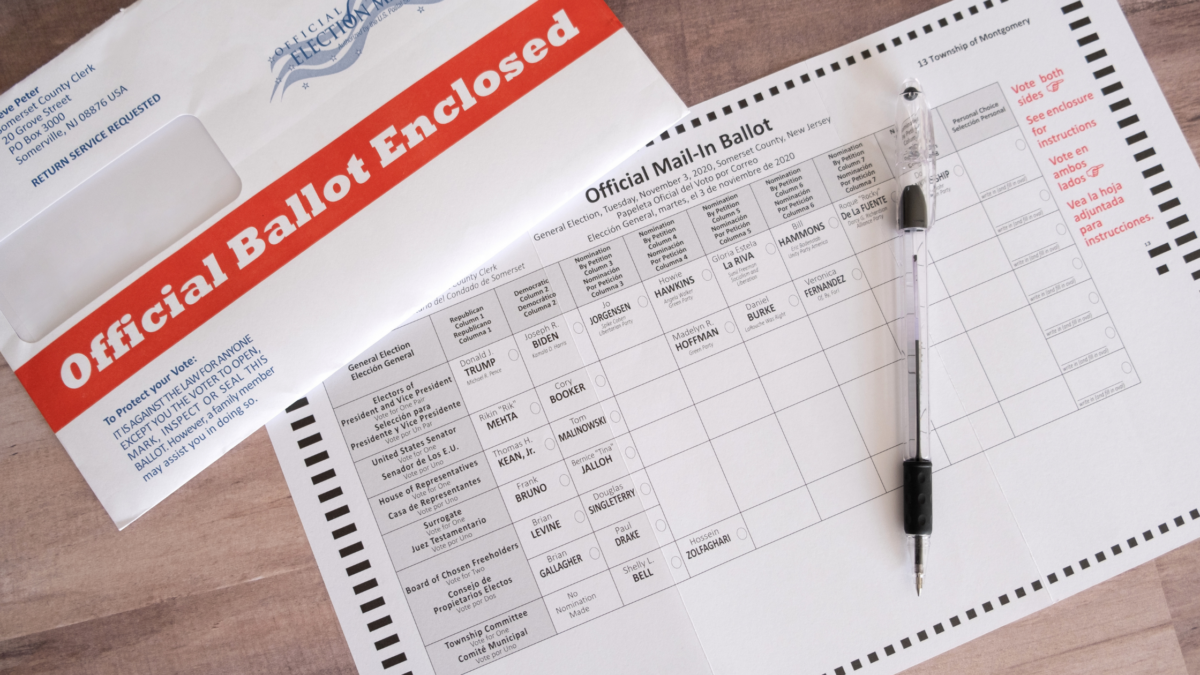
SCOTUS Upholds Mississippi Mail-In Ballot Law
In Watson v. Republican National Committee, 609 U.S. ___ (2026), the U.S. Supreme Court held that federal election-day statutes do not prevent Mississippi from counting absentee ballots postmarked by Election Day but received up to five days therea...

Supreme Court Rules Law Enforcement Accessing Location Data Constitutes Fourth Amendment Search
In Chatrie v. United States, 609 U.S. ___ (2026), the U.S. Supreme Court held that law enforcement acquisition of a user's cell-phone location data via a geofence warrant constitutes a "search" under the Fourth Amendment. Facts of the Case On ...

SCOTUS Rules States Can Ban Transgender Athletes from Female Sports
In West Virginia v. B.P.J., 609 U.S. ___ (2026), the U.S. Supreme Court held that Title IX allows schools to provide separate women’s and men’s sports teams defined by biological sex. Accordingly, it further found that West Virginia and Idaho di...
Supreme Court Strikes Down Limits on Coordinated Political Party Spending
In National Republican Senatorial Committee v. Federal Election Commission, 609 U.S. ____ (2026), the U.S. Supreme Court held that the Federal Election Campaign Act’s restrictions on a political party’s spending on campaign activities in coordin...
Supreme Court Reaffirms Birthright Citizenship, Striking Down Executive Order
In Trump v. Barbara, 609 U.S. ___ (2026), the U.S. Supreme Court struck down President Donald Trump’s Executive Order attempting to end birthright citizenship. According to the Court, children born in the United States to parents unlawfully or tem...
Previous Articles
Supreme Court Clarifies Constitutionality of Tax Foreclosure Sales
by DONALD SCARINCI on September 28, 2026
In Pung v. Isabella County, 609 U.S. ____ (2026), the U.S. Supreme Court held that the proper basel...
Supreme Court Closes Door on Judicially Created Claims Under Alien Tort Statute
by DONALD SCARINCI on September 21, 2026
In Cisco Systems, Inc. v. Doe, 609 U.S. ___ (2026), the U.S. Supreme Court ruled that federal cour...
US Supreme Court Upholds “Metering” Policy for Asylum Seekers
by DONALD SCARINCI on September 15, 2026
In Mullin v. Al Otro Lado, 609 U.S. ___ (2026), the U.S. Supreme Court held that an alien standing ...