
Constitutional Law Reporter
Award
Menu
  • Home
  • US Constitution
  • Supreme Court Cases
  • Justices
    • Chief Supreme Court Justices
    • Current Supreme Court Justices
    • Past US Supreme Court Justices
  • American Biographies
    • General
    • Presidents
    • Vice-Presidents
    • First Ladies
    • Signers of the U.S. Constitution
    • Signers of the Declaration of Independence
    • Delegates of the U.S. Constitution
    • Misc – Great American Bios
  • Articles
    • Current Cases
    • Historical Cases
    • Impeachment
  • Videos
  • Links
Hot-Topics

November 5, 2025 | Key Cases to Watch During the Supreme Court’s November Sitting

A B C D E F G H I J K L M N O P Q R S T U V W X Y Z
<< Back

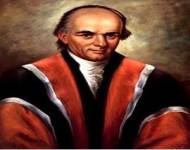
Alfred Moore

Alfred Moore

Early Life

Alfred Moore was born on May 21, 1755, in New Hanover County, North Carolina. Moore received his early education in Boston before returning to North Carolina to study law under his father, a former colonial judge. Moore was admitted to the bar in 1775 but delayed starting his practice to join the war. From 1775 to 1782 Moore served in a number of ranks including officer of the First North Carolina Regiment.

Legal Career

Following the war, Moore was elected to the North Carolina General Assembly. In 1782, Moore succeeded James Iredell, a future Supreme Court Justice, in the position of North Carolina Attorney General. Moore served as Attorney General until his resignation in 1791. Moore maintained that the General Assembly’s creation of solicitor general in 1790 infringed upon his duties.

Quickly following his resignation as Attorney General, Moore was elected to the North Carolina House of Commons. Three years later in 1794 Moore ran as the Federalist candidate for the North Carolina United States Senate, but lost by only one vote. Moore then served as a Superior Court Judge from 1798 to 1799.

Supreme Court

Following the sudden death of Supreme Court Associate Justice James Iredell in late 1799, President Adams nominated Moore to fill the vacant seat. Moore accepted, and his tenure as U.S. Supreme Court Justice officially began on April 21, 1800.

Due to poor health, Moore’s contribution as Supreme Court Justice was limited. He served on his post for only four years, and during that time only issued one opinion. That opinion came in the 1800 Bas v. Tingy case regarding a conflict with France. Justice Moore supported the majority opinion in the court that a partial, limited war had broken out with France.

During the Marbury v. Madison (1803) hearing, undoubtedly the most important case during Moore’s tenure on the Supreme Court, Moore reportedly missed the arguments due to illness.

Death

Moore resigned from the Supreme Court on January 26, 1804, citing issues with deteriorating health. He died in Bladen County, North Carolina on October 15, 1810.


Notable Cases:

Bas v. Tingy (1800)

Marbury v. Madison (1803)

Previous Articles

SCOTUS Clears Way to Terminate Protected Status for Venezuelan Nationals
by DONALD SCARINCI on October 29, 2025

On October 3, 2025, the U.S. Supreme Court granted an emergency request from the Trump Administrati...

Read More
Supreme Court Cases to Watch in the October Sitting
by DONALD SCARINCI on October 23, 2025

The U.S. Supreme Court’s new term, which began on October 6, has the potential to be historic. In...

Read More
SCOTUS Clears Way for Termination of FTC Commissioner
by DONALD SCARINCI on October 17, 2025

The U.S. Supreme Court’s emergency order in Trump v. Slaughter, 606 U.S. ____ (2025), allows Pres...

Read More
All Posts

The Amendments

  • Amendment1
    • Establishment ClauseFree Exercise Clause
    • Freedom of Speech
    • Freedoms of Press
    • Freedom of Assembly, and Petitition
    Read More
  • Amendment2
    • The Right to Bear Arms
    Read More
  • Amendment4
    • Unreasonable Searches and Seizures
    Read More
  • Amendment5
    • Due Process
    • Eminent Domain
    • Rights of Criminal Defendants
    Read More

Preamble to the Bill of Rights

Congress of the United States begun and held at the City of New-York, on Wednesday the fourth of March, one thousand seven hundred and eighty nine.

THE Conventions of a number of the States, having at the time of their adopting the Constitution, expressed a desire, in order to prevent misconstruction or abuse of its powers, that further declaratory and restrictive clauses should be added: And as extending the ground of public confidence in the Government, will best ensure the beneficent ends of its institution.

Read More

More Recent Posts

  • Supreme Court Clarifies Applicability of First Step Act to Vacated Sentences
  • SCOTUS Rules E-Cigarette Retailers Can Challenge FDA Order in Fifth Circuit
  • Supreme Court Expands Judicial Review of Agency Actions
  • Supreme Court Pauses Order Reinstating CPSC Commissioners

Constitutional Law Reporter Twitter

A Twitter List by S_H_Law

Constitutional Law Reporter RSS

donald scarinci constitutional law attorney

Editor

Donald Scarinci

Managing Partner

Scarinci Hollenbeck

(201) 806-3364

Awards


Follow me

© 2018 Scarinci Hollenbeck, LLC. All rights reserved.

Prior results do not guarantee a similar outcome. Attorney Advertising