
Constitutional Law Reporter
Award
Menu
  • Home
  • US Constitution
  • Supreme Court Cases
  • Justices
    • Chief Supreme Court Justices
    • Current Supreme Court Justices
    • Past US Supreme Court Justices
  • American Biographies
    • General
    • Presidents
    • Vice-Presidents
    • First Ladies
    • Signers of the U.S. Constitution
    • Signers of the Declaration of Independence
    • Delegates of the U.S. Constitution
    • Misc – Great American Bios
  • Articles
    • Current Cases
    • Historical Cases
    • Impeachment
  • Videos
  • Links
Hot-Topics

January 13, 2026 | Supreme Court Halts Deployment of National Guard to Chicago

A B C D E F G H I J K L M N O P Q R S T U V W X Y Z
<< Back

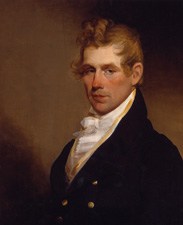
John McKinley

John McKinley (1837-1852)

Lived from 1780 to 1852.

Early Years

Justice John McKinley was born on May 1, 1780, in Culpepper County, Virginia, to Andrew McKinley and Mary McKinley. After moving to Kentucky as a child, McKinley studied law on his own and was admitted to the Kentucky bar in 1800. In 1818, McKinley moved to Alabama, where he became actively involved state politics. McKinley held seats in the state legislature before being elected to the United States Senate in 1826.

Supreme Court

On September 25, 1837, President Martin Van Buren appointed McKinley to fill one of two newly created seats on the Supreme Court. Assigned to the ninth circuit, McKinley oversaw Alabama, Mississippi, Louisiana, and Arkansas. On the Supreme Court, McKinley was a moderate supporter of states’ rights, but he generally voted with the majority. He wrote a scant 19 majority opinions, 4 dissents and 2 concurrences during his 14 years on the bench.

One of the few cases for which McKinley is noted rose to the circuit level during his first year on the bench. In his decision, McKinley ruled in support of Alabama’s power to stop out-of-state banks from buying and selling bills of exchange. The Supreme Court heard the appeal of the case, later called Bank of Augusta v. Earle, in 1839. On appeal, the Court reversed McKinley’s opinion by an 8-1 ruling, with McKinley issuing the lone dissent. His most significant contribution, however, was his opinion in Pollard’s Lessee v. Hagan in 1845, which provided a legal basis for opening America’s land.

McKinley had little impact on American constitutional law as a Supreme Court Justice. Stress and poor health limited his participation on the Court for much of the latter part of his tenure.

Death

McKinley died on July 19, 1852 at the age of 72 in Louisville, Kentucky.

Previous Articles

Supreme Court to Address Racial Discrimination in Jury Selection
by DONALD SCARINCI on January 13, 2026

While the U.S. Supreme Court has concluded oral arguments for the year, it continues to add cases t...

Read More
SCOTUS Agrees to Consider Merits of Birthright Citizenship Case
by DONALD SCARINCI on

On December 5, 2025, the U.S. Supreme Court agreed to review the constitutionality of one of Presid...

Read More
Supreme Court Allows Texas to Use Challenged Congressional Map
by DONALD SCARINCI on December 24, 2025

In Abbott v. League of United Latin American Citizens, 607 U.S. ____ (2025), the U.S. Supreme Court...

Read More
All Posts

The Amendments

  • Amendment1
    • Establishment ClauseFree Exercise Clause
    • Freedom of Speech
    • Freedoms of Press
    • Freedom of Assembly, and Petitition
    Read More
  • Amendment2
    • The Right to Bear Arms
    Read More
  • Amendment4
    • Unreasonable Searches and Seizures
    Read More
  • Amendment5
    • Due Process
    • Eminent Domain
    • Rights of Criminal Defendants
    Read More

Preamble to the Bill of Rights

Congress of the United States begun and held at the City of New-York, on Wednesday the fourth of March, one thousand seven hundred and eighty nine.

THE Conventions of a number of the States, having at the time of their adopting the Constitution, expressed a desire, in order to prevent misconstruction or abuse of its powers, that further declaratory and restrictive clauses should be added: And as extending the ground of public confidence in the Government, will best ensure the beneficent ends of its institution.

Read More

More Recent Posts

  • Supreme Court Clarifies Applicability of First Step Act to Vacated Sentences
  • SCOTUS Rules E-Cigarette Retailers Can Challenge FDA Order in Fifth Circuit
  • Supreme Court Expands Judicial Review of Agency Actions
  • Supreme Court Pauses Order Reinstating CPSC Commissioners

Constitutional Law Reporter Twitter

A Twitter List by S_H_Law

Constitutional Law Reporter RSS

donald scarinci constitutional law attorney

Editor

Donald Scarinci

Managing Partner

Scarinci Hollenbeck

(201) 806-3364

Awards


Follow me

© 2018 Scarinci Hollenbeck, LLC. All rights reserved.

Prior results do not guarantee a similar outcome. Attorney Advertising