

Constitutional Law Reporter
Award
Menu
  • Home
  • US Constitution
  • Supreme Court Cases
  • Justices
    • Chief Supreme Court Justices
    • Current Supreme Court Justices
    • Past US Supreme Court Justices
  • American Biographies
    • General
    • Presidents
    • Vice-Presidents
    • First Ladies
    • Signers of the U.S. Constitution
    • Signers of the Declaration of Independence
    • Delegates of the U.S. Constitution
    • Misc – Great American Bios
  • Articles
    • Current Cases
    • Historical Cases
    • Impeachment
  • Videos
  • Links
Hot-Topics

December 24, 2025 | Supreme Court Allows Texas to Use Challenged Congressional Map

A B C D E F G H I J K L M N O P Q R S T U V W X Y Z
<< Back

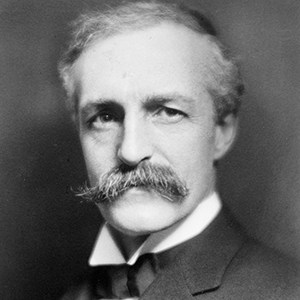
Gifford Pinchot

Gifford Pinchot

Gifford Pinchot was a key figure in the conservation movement of the early 20th Century. He served as Chief Forester of the U. S. Division of Forestry from 1898 to 1910.

Early Life

Gifford Pinchot was born in 1865 to a wealthy Connecticut family. After graduating from Yale University, Pinchot studied at the French National School of Forestry. Upon his return to the United States, Pinchot dedicated himself to the American forestry movement. In 1898, Pinchot was named chief of the U.S. Department of Agriculture’s Division of Forestry.

Chief Forester

When his good friend Theodore Roosevelt became President, Pinchot was appointed the the newly-created position of Chief Forester of the U. S. Division of Forestry. He served from 1898 to 1910. During the Roosevelt Administration, more than 200 million acres of national forest came under scientific land management. His policies, which advocated the controlled, profitable use of natural resources so they would provide the maximum benefit to mankind, became a model for conservation.

Of Pinchot’s service to the Administration, Roosevelt wrote: “Among the many, many public officials who under my administration rendered literally invaluable service to the people of the United States, Gifford Pinchot on the whole, stood first.”

Political Career

In the Taft Administration, Pinchot was fired as the head of the Forest Service for criticizing Richard Ballinger, Secretary of the Interior, for favoring big business over conservationism. The controversy that led to Pinchot’s termination was one of the factors that created the split in the Republican Party and the formation of the Progressive Party.

In 1922, Pinchot was elected Governor of Pennsylvania. He served from 1923 to 1927, and again from 1931 to 1935. In the office, Pinchot worked to enforce Prohibition, regulate public utilities, and provide relief to the unemployed. During World War II, Pinchot invented a water gathering device and fishing kits for use in navy life boats. He died in 1946.


Previous Articles

Justices Skeptical of Trump Administration Tariffs
by DONALD SCARINCI on December 18, 2025

The U.S. Supreme Court heard oral arguments in Learning Resources, Inc. v. Trump (consolidated with...

Read More
SCOTUS Takes Up Key Election Case Involving Mail-In Ballots
by DONALD SCARINCI on December 17, 2025

The U.S. Supreme Court recently granted certiorari in a key election case, Watson v. Republican Nat...

Read More
SCOTUS Adds Second Amendment Case to Docket
by DONALD SCARINCI on November 27, 2025

The U.S. Supreme Court will consider another important Second Amendment case this term. The latest ...

Read More
All Posts

The Amendments

  • Amendment1
    • Establishment ClauseFree Exercise Clause
    • Freedom of Speech
    • Freedoms of Press
    • Freedom of Assembly, and Petitition
    Read More
  • Amendment2
    • The Right to Bear Arms
    Read More
  • Amendment4
    • Unreasonable Searches and Seizures
    Read More
  • Amendment5
    • Due Process
    • Eminent Domain
    • Rights of Criminal Defendants
    Read More

Preamble to the Bill of Rights

Congress of the United States begun and held at the City of New-York, on Wednesday the fourth of March, one thousand seven hundred and eighty nine.

THE Conventions of a number of the States, having at the time of their adopting the Constitution, expressed a desire, in order to prevent misconstruction or abuse of its powers, that further declaratory and restrictive clauses should be added: And as extending the ground of public confidence in the Government, will best ensure the beneficent ends of its institution.

Read More

More Recent Posts

  • Supreme Court Clarifies Applicability of First Step Act to Vacated Sentences
  • SCOTUS Rules E-Cigarette Retailers Can Challenge FDA Order in Fifth Circuit
  • Supreme Court Expands Judicial Review of Agency Actions
  • Supreme Court Pauses Order Reinstating CPSC Commissioners

Constitutional Law Reporter Twitter

A Twitter List by S_H_Law

Constitutional Law Reporter RSS

donald scarinci constitutional law attorney

Editor

Donald Scarinci

Managing Partner

Scarinci Hollenbeck

(201) 806-3364

Awards


Follow me

© 2018 Scarinci Hollenbeck, LLC. All rights reserved.

Prior results do not guarantee a similar outcome. Attorney Advertising