
Constitutional Law Reporter
Award
Menu
  • Home
  • US Constitution
  • Supreme Court Cases
  • Justices
    • Chief Supreme Court Justices
    • Current Supreme Court Justices
    • Past US Supreme Court Justices
  • American Biographies
    • General
    • Presidents
    • Vice-Presidents
    • First Ladies
    • Signers of the U.S. Constitution
    • Signers of the Declaration of Independence
    • Delegates of the U.S. Constitution
    • Misc – Great American Bios
  • Articles
    • Current Cases
    • Historical Cases
    • Impeachment
  • Videos
  • Links
Hot-Topics

November 5, 2025 | Key Cases to Watch During the Supreme Court’s November Sitting

A B C D E F G H I J K L M N O P Q R S T U V W X Y Z
<< Back

Jared Ingersoll

Jared Ingersoll
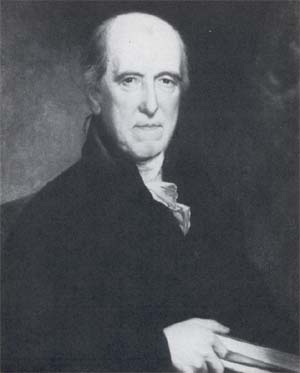
By Drawing: Oil (1820) by Charles Willson Peale. Miss Anna Warren Ingersoll, Philadelphia. – http://www.cr.nps.gov/history/online_books/constitution/bioa.htm http://www.uspresidentialhistory.com, Public Domain, https://commons.wikimedia.org/w/index.php?curid=1470128

Jared Ingersoll represented Pennsylvania at the Constitutional Convention. An accomplished attorney, he argued before the U.S. Supreme Court in the early days of the republic, arguing important constitutional law issues in Chisolm v. Georgia and Hylton v. United States. He also unsuccessfully ran for vice-president in 1812.

Early Life

Jared Ingersoll was born on October 24, 1749, in New Haven, Connecticut. He attended Yale University, graduating in 1766. He later was admitted to practice law in Pennsylvania. Ingersoll’s father served as a British Colonial official, and he sent his son to Europe for two years to keep him away from the initial unrest in the colonies. When Ingersoll returned in 1778, he was no longer a Loyalist and supported the American war for independence. Ingersoll entered politics in 1780 upon winning election to the Continental Congress.

Constitutional Convention

In 1787, Ingersoll represented Pennsylvania at the Constitutional Convention. At the outset of the Convention, Ingersoll was in favor of simply revising the existing Articles of Confederation. However, he ultimately supported the plan to establish a new federal government. While he regularly attended the sessions, Ingersoll rarely participated in debates.

Later Life

Following the Convention, Ingersoll continued to hold public office. He served as attorney general of Pennsylvania from 1790 to 1799 and again from 1811 to 1817. He also briefly served as Philadelphia’s city solicitor (1798-1801), and as U.S. district attorney for Pennsylvania (1800-1801). Ingersoll unsuccessfully ran for Vice President in 1812. From 1821to 1822, he sat as presiding judge of the Philadelphia district court.

Ingersoll’s private legal practice was also very successful. For many years, he was legal counsel to Stephen Girard, one of the country’s most prominent businessmen. Ingersoll also argued before the U.S. Supreme Court, tackling issues related to the Constitution he had helped create years prior. He argued in both Chisholm v. Georgia, 2 U.S. 419 (1793), and Hylton v. United States, 3 U.S. 171 (1796), although he was on the losing side. Ingersoll also represented fellow-delegate William Blount, a senator, when he was facing impeachment. He died on October 31, 1822, at the age 73.


Previous Articles

SCOTUS Clears Way to Terminate Protected Status for Venezuelan Nationals
by DONALD SCARINCI on October 29, 2025

On October 3, 2025, the U.S. Supreme Court granted an emergency request from the Trump Administrati...

Read More
Supreme Court Cases to Watch in the October Sitting
by DONALD SCARINCI on October 23, 2025

The U.S. Supreme Court’s new term, which began on October 6, has the potential to be historic. In...

Read More
SCOTUS Clears Way for Termination of FTC Commissioner
by DONALD SCARINCI on October 17, 2025

The U.S. Supreme Court’s emergency order in Trump v. Slaughter, 606 U.S. ____ (2025), allows Pres...

Read More
All Posts

The Amendments

  • Amendment1
    • Establishment ClauseFree Exercise Clause
    • Freedom of Speech
    • Freedoms of Press
    • Freedom of Assembly, and Petitition
    Read More
  • Amendment2
    • The Right to Bear Arms
    Read More
  • Amendment4
    • Unreasonable Searches and Seizures
    Read More
  • Amendment5
    • Due Process
    • Eminent Domain
    • Rights of Criminal Defendants
    Read More

Preamble to the Bill of Rights

Congress of the United States begun and held at the City of New-York, on Wednesday the fourth of March, one thousand seven hundred and eighty nine.

THE Conventions of a number of the States, having at the time of their adopting the Constitution, expressed a desire, in order to prevent misconstruction or abuse of its powers, that further declaratory and restrictive clauses should be added: And as extending the ground of public confidence in the Government, will best ensure the beneficent ends of its institution.

Read More

More Recent Posts

  • Supreme Court Clarifies Applicability of First Step Act to Vacated Sentences
  • SCOTUS Rules E-Cigarette Retailers Can Challenge FDA Order in Fifth Circuit
  • Supreme Court Expands Judicial Review of Agency Actions
  • Supreme Court Pauses Order Reinstating CPSC Commissioners

Constitutional Law Reporter Twitter

A Twitter List by S_H_Law

Constitutional Law Reporter RSS

donald scarinci constitutional law attorney

Editor

Donald Scarinci

Managing Partner

Scarinci Hollenbeck

(201) 806-3364

Awards


Follow me

© 2018 Scarinci Hollenbeck, LLC. All rights reserved.

Prior results do not guarantee a similar outcome. Attorney Advertising