

Supreme Court Rules Law Enforcement Accessing Location Data Constitutes Fourth Amendment Search
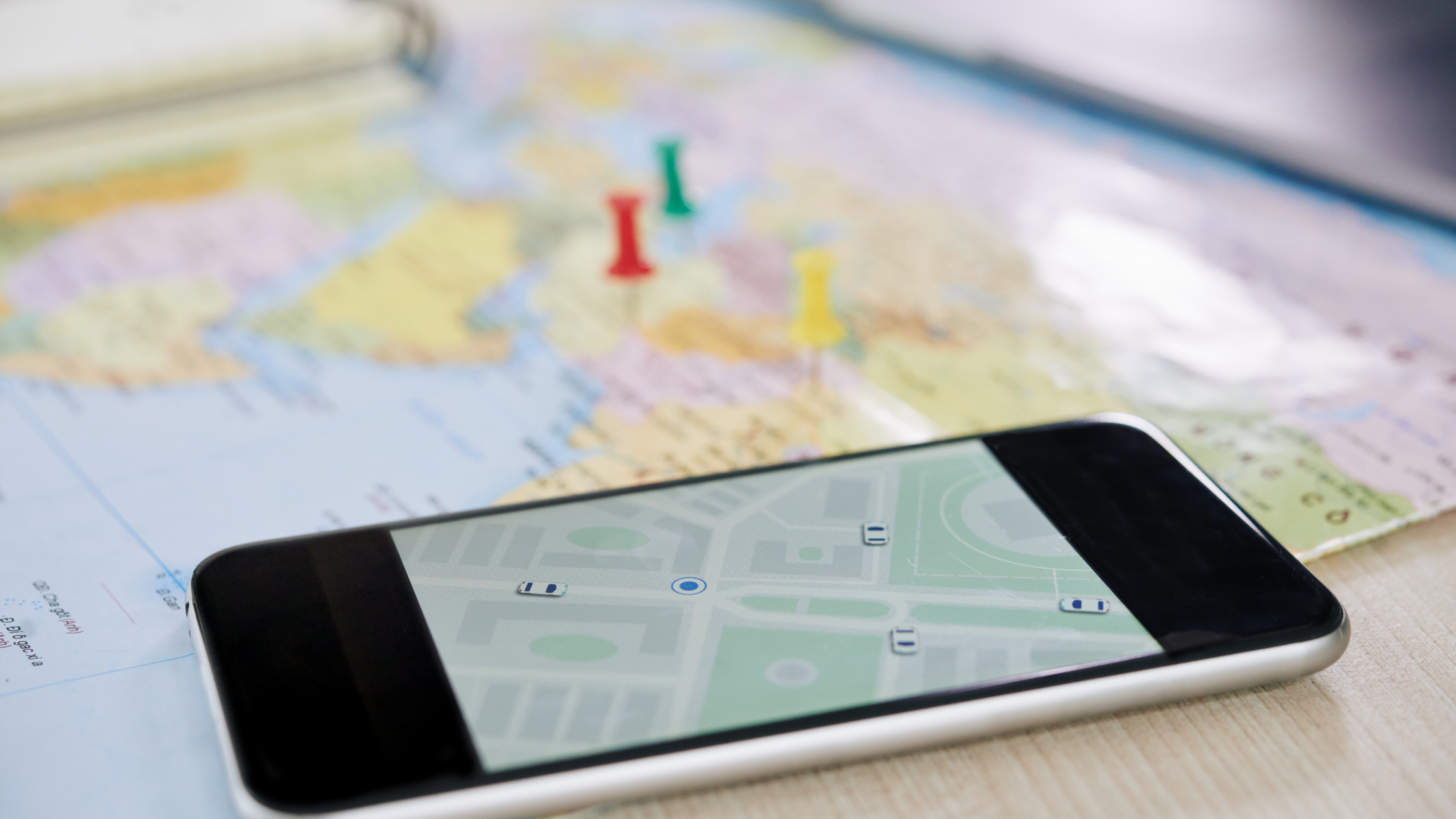
In Chatrie v. United States, 609 U.S. ___ (2026), the U.S. Supreme Court held that law enforcement acquisition of a user’s cell-phone location data via a geofence warrant constitutes a “search” under the Fourth Amendment.
Facts of the Case
On May 20, 2019, a man robbed a credit union in Midlothian, Virginia. Local police officers learned from witness interviews and surveillance footage that the robber had approached the credit union from a corner of an adjacent church while appearing to talk on a cell phone, but they could not find out anything more, and the robber remained at large.
On June 14, the police officers applied to a Virginia magistrate for a geofence warrant directed to Google, which would require Google to hand over data about the cell phones located within a 150-meter radius of the credit union—the so-called “geofence”—near the time of the crime. The application described the cell-phone location data Google collects through a service called Location History, which records the location of a user’s cell phone every two minutes or so. The application also explained how that cell-phone location data could help identify the robber, possible accomplices, or additional witnesses.
The warrant described a three-step process that the police would follow: at step one, Google would produce anonymized location data for all cell phones within the geofence 30 minutes before to 30 minutes after the robbery; at step two, officers would attempt to narrow the list, and Google would provide additional anonymized data for that narrowed list, consisting of cell-phone locations both inside and outside the geofence during a two-hour period surrounding the robbery; and at step three, officers would further narrow the list, and Google would turn over identifying information, including names and phone numbers, for users on the final list. The magistrate issued the warrant, and through this process, Google ultimately produced three cell-phone users’ identifying information, including petitioner Okello Chatrie, whose location data showed that he entered the geofence about ten minutes before the robbery and headed toward a residential area immediately after leaving the bank.
Following further police work, a federal grand jury charged Chatrie with robbery and related firearms offenses, and he moved to suppress the information the police obtained from Google. According to Chatrie, the officers had acquired that data through a Fourth Amendment search, and the warrant ostensibly authorizing that search was invalid.
The District Court found that the geofence warrant “plainly violates the rights enshrined in [the Fourth] Amendment” but denied the motion based on the good-faith exception to the exclusionary rule. A divided panel of the Fourth Circuit affirmed on different reasoning, holding that no search occurred because Chatrie “did not have a reasonable expectation of privacy in two hours’ worth of Location History data voluntarily exposed to Google.”
The Fourth Circuit granted rehearing en banc and affirmed in a one-sentence per curiam, with the court dividing evenly on whether a Fourth Amendment search had occurred.
Supreme Court’s Decision
The Supreme Court vacated and remanded by a vote of 6-3. According to the majority, police officers conducted a Fourth Amendment search when they acquired Chatrie’s location data from Google because an individual has a reasonable expectation of privacy in his cell-phone location information. Justice Elena Kagan wrote on behalf of the majority, which included Chief Justice John Roberts and Justices Sonia Sotomayor, Brett Kavanaugh, and Ketanji Brown Jackson,
“[T]he police conducted a search when they gained access to Location History data,” Justice Kagan wrote. “An individual has a reasonable expectation of privacy in records about his cell phone’s location, and police intrude on that constitutionally protected interest when they demand the information—even though for only a limited time, and from a third-party tech company.”
As Justice Kagan explained, the Fourth Amendment protects individuals’ reasonable expectations of privacy, and governmental “intrusion into that private sphere generally qualifies as a search.” In Carpenter v. United States, 585 U.S. 296 (2018), the Court previously found that accessing cell-site location information (CSLI) constitutes a Fourth Amendment search because “individuals have a reasonable expectation of privacy in the whole of their physical movements.”
In this case, the majority concluded that everything Carpenter relied on to find that law enforcement officers conducted a Fourth Amendment search when they accessed CSLI records applies “as well or better” to the police’s accessing of Location History data.In support, Justice Kagan noted that Location History provides an even more fine-tuned picture of a person’s movements, pinpointing location within around twenty meters and allows police to reconstruct “retrospective[ly],” and with no real effort, people’s comings and goings in any area, enabling “tireless and absolute surveillance” of any number of people in any number of places.
The majority rejected the Government’s argument that accessing only a short amount of cell-phone location information does not count as a Fourth Amendment search fails. “Consider just a few trips that a person is apt to think indisputably private’ to the psychiatrist, the plastic surgeon, the abortion clinic, the AIDS treatment center, the strip club, the criminal defense attorney, [or] the by-the-hour motel,”Justice Kagan wrote.
Finally, the Supreme Court remanded for the Fourth Circuit to reconsider the constitutionality of the warrant in Chatrie’s case.
Dissent
Justices Samuel Alito, Amy Coney Barrett and Clarence Thomas dissented. Justice Alito criticized the majority for failing to address the legality of the warrant in Chatrie’s case.
“Indeed, by refusing to review the one question that could have at least theoretically given Chatrie some hope of relief, the Court carefully set the stage for its planned performance: striking a pose as a great champion of privacy in the digital age. I cannot support this irresponsible escapade,” he wrote.
Previous Articles
Supreme Court Clarifies Constitutionality of Tax Foreclosure Sales
by DONALD SCARINCI on September 28, 2026
In Pung v. Isabella County, 609 U.S. ____ (2026), the U.S. Supreme Court held that the proper basel...
Supreme Court Closes Door on Judicially Created Claims Under Alien Tort Statute
by DONALD SCARINCI on September 21, 2026
In Cisco Systems, Inc. v. Doe, 609 U.S. ___ (2026), the U.S. Supreme Court ruled that federal cour...
US Supreme Court Upholds “Metering” Policy for Asylum Seekers
by DONALD SCARINCI on September 15, 2026
In Mullin v. Al Otro Lado, 609 U.S. ___ (2026), the U.S. Supreme Court held that an alien standing ...