
Constitutional Law Reporter
Award
Menu
  • Home
  • US Constitution
  • Supreme Court Cases
  • Justices
    • Chief Supreme Court Justices
    • Current Supreme Court Justices
    • Past US Supreme Court Justices
  • American Biographies
    • General
    • Presidents
    • Vice-Presidents
    • First Ladies
    • Signers of the U.S. Constitution
    • Signers of the Declaration of Independence
    • Delegates of the U.S. Constitution
    • Misc – Great American Bios
  • Articles
    • Current Cases
    • Historical Cases
    • Impeachment
  • Videos
  • Links
Hot-Topics

November 27, 2025 | SCOTUS Adds Second Amendment Case to Docket

Salem Poor

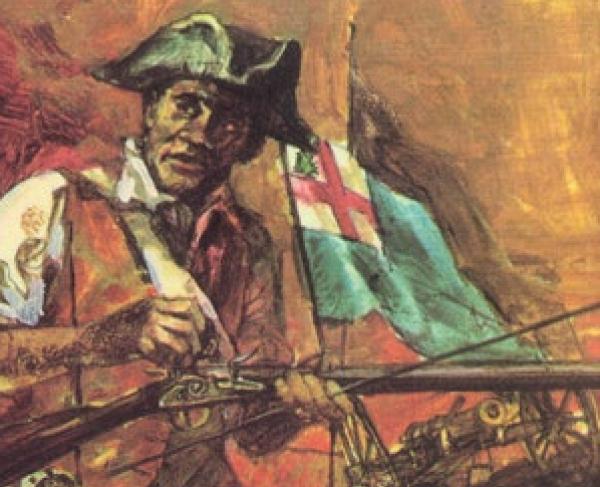
Salem Poor was born a slave in Massachusetts. After purchasing his own freedom, he went on to play a pivotal role as a revolutionary soldier in the Battle of Bunker Hill.

Early Life

Salem Poor was born in 1747 in Andover, Massachusetts on a farm owned by John and Rebecca Poor. In 1769, he purchased his freedom for 27 pounds, a significant sum akin to one year’s wages. In 1771, Poor married Nancy Parker, a free biracial woman. The couple had a son, Jonas, who was baptized in September of 1776.

Revolutionary War

In 1775, Poor enlisted in the militia, joining Captain James Frye’s regiment of Massachusetts Minutemen. His regiment, along with two more, were ordered to Charlestown, Massachusetts to defend Breed’s Hill from British forces. Poor distinguished himself during the Battle of Bunker Hill on June 17, 1775, helping the Patriots repel several attacks by the much larger British army.

Following his heroic actions, Colonel William Prescott and 13 regimental commanders signed a testimonial that was sent to the commonwealth’s General Court, which read:

A Negro Man Called Salem Poor… in the late Battle of Charleston, behaved like an Experienced Officer, as Well as an Excellent Soldier, to Set forth Particulars of his Conduct Would Be Tedious, Wee Would Only begg leave to say in the person of this Sd. Negro Centers a Brave & gallant Soldier—the Reward due to so great and Distinguish a Character, We submit to the Congress.

According to his service record, Poor reenlisted several times. He fought in key battles at Saratoga, Monmouth, and Valley Forge before being discharged in March of 1780.

Later Life

In 1780, Poor married Mary Twing, a free African American.  Five years later, Poor placed an advertisement in the Boston Gazette “disavowing his wife’s debts and forewarned all persons from trusting Mary….” He subsequently married a white woman, Sarah Stevens, in 1787.

Poor married a fourth and final time in 1801. He died in 1802 at the age of 55. His gravesite at Copp’s Hill Burying Ground is now part of Boston’s historic Freedom Trail. Poor was also honored with a stamp in the “Contributors to the Cause” series created for the United States Bicentennial in 1976.

Previous Articles

Key Takeaways from Oral Arguments in Court’s Controversial Voting-Rights Case
by DONALD SCARINCI on November 12, 2025

The U.S. Supreme Court recently heard oral arguments in Louisiana v. Callais, which involves a key ...

Read More
Key Cases to Watch During the Supreme Court’s November Sitting
by DONALD SCARINCI on November 5, 2025

The U.S. Supreme Court’s November sitting begins on November 3 and concludes on November 12, 2025...

Read More
SCOTUS Clears Way to Terminate Protected Status for Venezuelan Nationals
by DONALD SCARINCI on October 29, 2025

On October 3, 2025, the U.S. Supreme Court granted an emergency request from the Trump Administrati...

Read More
All Posts

The Amendments

  • Amendment1
    • Establishment ClauseFree Exercise Clause
    • Freedom of Speech
    • Freedoms of Press
    • Freedom of Assembly, and Petitition
    Read More
  • Amendment2
    • The Right to Bear Arms
    Read More
  • Amendment4
    • Unreasonable Searches and Seizures
    Read More
  • Amendment5
    • Due Process
    • Eminent Domain
    • Rights of Criminal Defendants
    Read More

Preamble to the Bill of Rights

Congress of the United States begun and held at the City of New-York, on Wednesday the fourth of March, one thousand seven hundred and eighty nine.

THE Conventions of a number of the States, having at the time of their adopting the Constitution, expressed a desire, in order to prevent misconstruction or abuse of its powers, that further declaratory and restrictive clauses should be added: And as extending the ground of public confidence in the Government, will best ensure the beneficent ends of its institution.

Read More

More Recent Posts

  • Supreme Court Clarifies Applicability of First Step Act to Vacated Sentences
  • SCOTUS Rules E-Cigarette Retailers Can Challenge FDA Order in Fifth Circuit
  • Supreme Court Expands Judicial Review of Agency Actions
  • Supreme Court Pauses Order Reinstating CPSC Commissioners

Constitutional Law Reporter Twitter

A Twitter List by S_H_Law

Constitutional Law Reporter RSS

donald scarinci constitutional law attorney

Editor

Donald Scarinci

Managing Partner

Scarinci Hollenbeck

(201) 806-3364

Awards


Follow me

© 2018 Scarinci Hollenbeck, LLC. All rights reserved.

Prior results do not guarantee a similar outcome. Attorney Advertising