
Divided SCOTUS Sides With Fed Governor in Removal Dispute
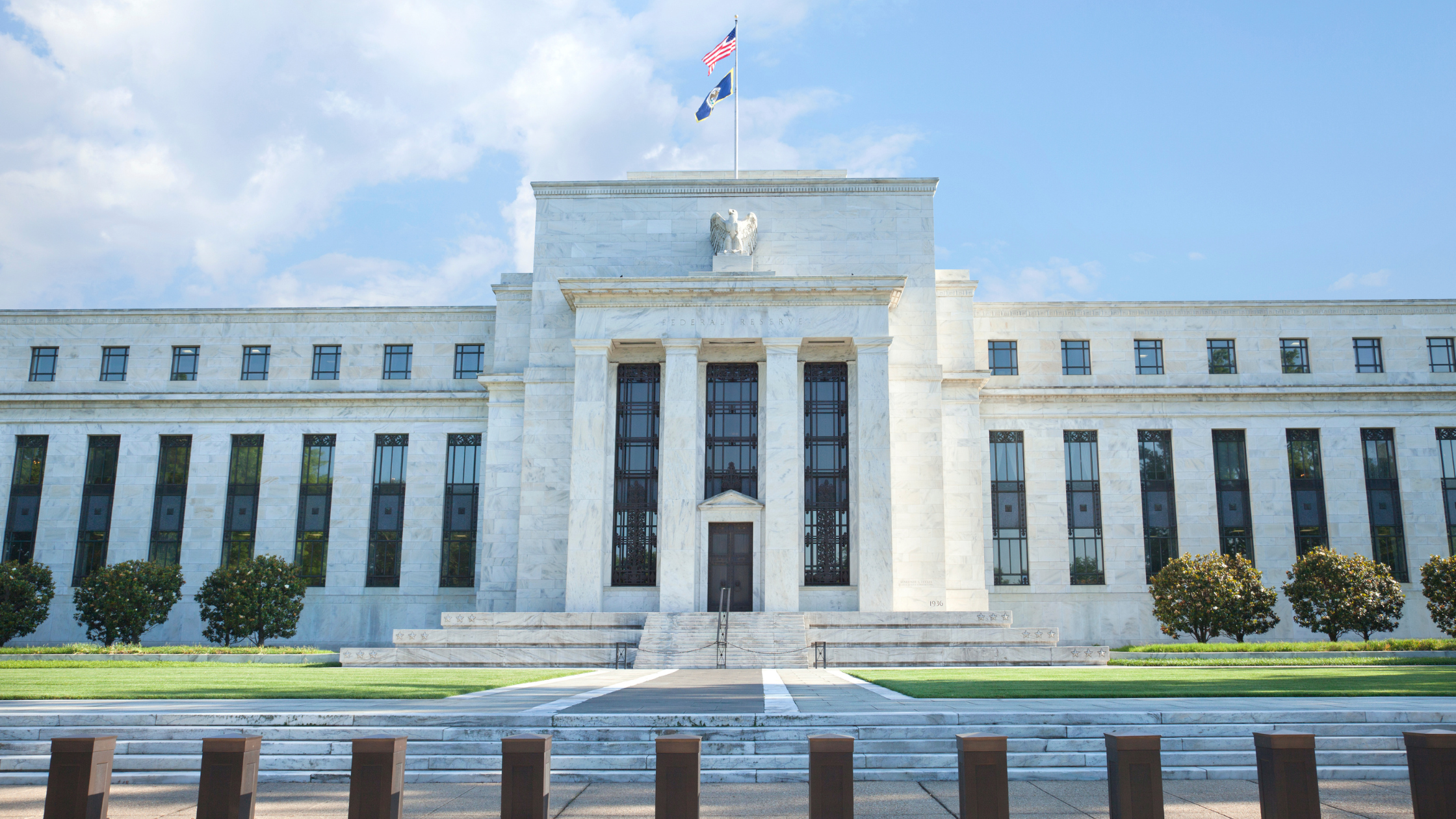
In Trump v. Cook, 609 U.S. ___ (2026), a divided Court denied the Government’s application to stay the district court’s order preliminarily enjoining the purported firing of Federal Reserve System Governor Lisa Cook pending the conclusion of litigation over her attempted removal. Cook can now remain in her role while the litigation continues in the lower courts.
Facts of the Case
In August 2025, President Trump purported to fire Lisa Cook, a member of the Board of Governors of the Federal Reserve System. Cook was the first Governor to be fired in the central bank’s 111-year history.
The Board consists of seven members, each appointed by the President and confirmed by the Senate. The Federal Reserve’s Governors do not serve at the President’s pleasure—they instead serve staggered 14-year terms, and may be removed only “for cause.”
Cook’s term on the Board of Governors was set to expire in 2038. On August 20, 2025, the Federal Housing Finance Agency’s Director posted to social media a letter in which he accused Cook of mortgage fraud. President Trump posted to social media that “Cook must resign, now!!!” and he later told reporters that he would “fire her if she doesn’t resign.” Three days later, the President purported to fire Cook for cause. In a letter to Cook, he stated that he had “reason to believe” that she “may have made false statements on one or more mortgage agreements.” He told her that he lacked “confidence in [her] integrity” and that he had determined that “faithfully executing the law requires [her] immediate removal from office.”
Cook subsequently filed suit, alleging that the attempted removal was not “for cause,” as required by statute, and that the President had in any event failed to comply with the statute’s (and the Constitution’s) requirement that she receive pretermination process. The District Court issued a preliminary injunction to prevent her removal.
The Court of Appeals declined to stay the injunction, and the Government filed an application for stay in the Supreme Court.
Supreme Court’s Decision
The Supreme Court denied the Government’s application by a vote of 5-4. Chief Justice John Roberts wrote on behalf of the majority, which included Justices Sonia Sotomayor, Elena Kagan, Brett Kavanaugh, and Ketanji Brown Jackson.
According to the majority, the Government failed to show that it was likely to prevail on the legal arguments advanced in its stay application.“Acceptance of the Government’s position would in effect transform the Federal Reserve’s for-cause protection into at-will employment—an interpretive leap out of step with the statute Congress enacted and our Nation’s tradition of central banking protected from political interference,” Chief Justice Roberts wrote.
The majority went on to reject each of the Government’s arguments in favor of the stay. The justices first dismissed the argument that the President’s determination of “cause” is wholly unreviewable because the statute “commits the determination of cause to” the President alone. According to the majority, whether a Governor should be “removed for cause” is a decision only the President can make (short of impeachment), but that does not mean that he may make that decision for any reason, or no reason. “Even when a statute ‘delegates discretionary authority’ to the Executive Branch, a court must ‘independently interpret the statute and effectuate the will of Congress subject to constitutional limits,’” the Chief Justice explained, citing Loper Bright Enterprises v. Raimondo, 603 U.S. 369 (2024).
The majority next turned to what constitutes “cause.” Chief Justice Roberts emphasized that any definition of “cause” must reflect the Federal Reserve’s unique historical status and role, further noting that the Reserve operates at a deliberate remove from the ordinary political process, including a budget free of congressional control, and policies set not only by Governors, but also by representatives of the private regional banks. It ultimately established a substantial threshold for “cause,” concluding that whether “cause” for removal exists in any given situation will depend, at least in part, on the seriousness of the alleged misconduct, and the extent of any nexus that may exist to the Governor’s professional duties.The Court also found that the Trump administration failed to afford Cook the procedural protections afforded by statute, including notice and an opportunity for hearing afforded executive officeholders subject to for-cause protections.
Finally, the Court confirmed that the protection from removal enjoyed by Governors of the Federal Reserve is consistent with the Constitution.In declining to “sow doubt as to the status of one of the Nation’s (and the world’s) most important financial institutions,” the majority stressed that What matters is that the Federal Reserve remains consistent with the principles that underpin the First and Second Banks—namely, that monetary policy should not be subject to political interference. “In the Court’s view, the Federal Reserve maintains the balance struck by the founding generation under modern circumstances,” Chief Justice Roberts wrote.
Dissent
Justices Clarence Thomas and Amy Coney Barrett authored dissents. Justice Samuel Alito also wrote a dissenting opinion, which was joined by Justice Neil Gorsuch.
“Although the Court expresses concern that the President removed a Board member for ‘the first time in the Federal Reserve’s 111-year history, it expresses no such concern that it today upholds an injunction against the President’s removal of an executive officer for the first time in the Constitution’s 237-year history,” Justice Thomas wrote.
Previous Articles
Supreme Court Clarifies Constitutionality of Tax Foreclosure Sales
by DONALD SCARINCI on September 28, 2026
In Pung v. Isabella County, 609 U.S. ____ (2026), the U.S. Supreme Court held that the proper basel...
Supreme Court Closes Door on Judicially Created Claims Under Alien Tort Statute
by DONALD SCARINCI on September 21, 2026
In Cisco Systems, Inc. v. Doe, 609 U.S. ___ (2026), the U.S. Supreme Court ruled that federal cour...
US Supreme Court Upholds “Metering” Policy for Asylum Seekers
by DONALD SCARINCI on September 15, 2026
In Mullin v. Al Otro Lado, 609 U.S. ___ (2026), the U.S. Supreme Court held that an alien standing ...