Menu


Hot-Topics
September 15, 2026 | US Supreme Court Upholds “Metering” Policy for Asylum Seekers
Tag: power of congress
Ogden v Saunders: The Contracts Clause
In Ogden v Saunders, 25 U.S. 213 (1827), the U.S. Supreme Court held that a New York bankruptcy law did not violate the Constitution’s Contracts Clause. The case is also most remembered as the only decision from which Chief Justice John Marshall...

Sturges v Crowninshield: Constitutionality of State Bankruptcy Laws
In Sturges v Crowninshield, 17 U.S. (4 Wheat.) 122 (1819), the U.S. Supreme Court considered whether a New York bankruptcy law, and its retroactive application, were constitutional. The justices concluded that federal power over bankruptcy was not ex...

Ware v Hylton: Supreme Court Power to Invalidate State Laws
Ware v Hylton: Supreme Court Power to Invalidate State Laws In Ware v. Hylton, 3 U.S. (3 Dall.) 199 (1796), the U.S. Supreme Court held that the federal courts are authorized to determine the constitutionality of state laws. The Court subsequently h...

U.S. V. O’Brien: Symbolic Speech and the First Amendment
In United States v. O'Brien, 391 U.S. 367 (1968), the U.S. Supreme Court upheld the constitutionality of a federal law that made burning or otherwise destroying draft cards a crime. In so ruling, the Court established a test for determining whether l...
Previous Articles
Supreme Court Rejects Claims Over Pesticide Cancer Warning
by DONALD SCARINCI on September 9, 2026
In Monsanto Co. v. Durnell, 609 U.S. ___ (2026), the U.S. Supreme Court held that the Federal Insec...
SCOTUS Upholds Mississippi Mail-In Ballot Law
by DONALD SCARINCI on August 31, 2026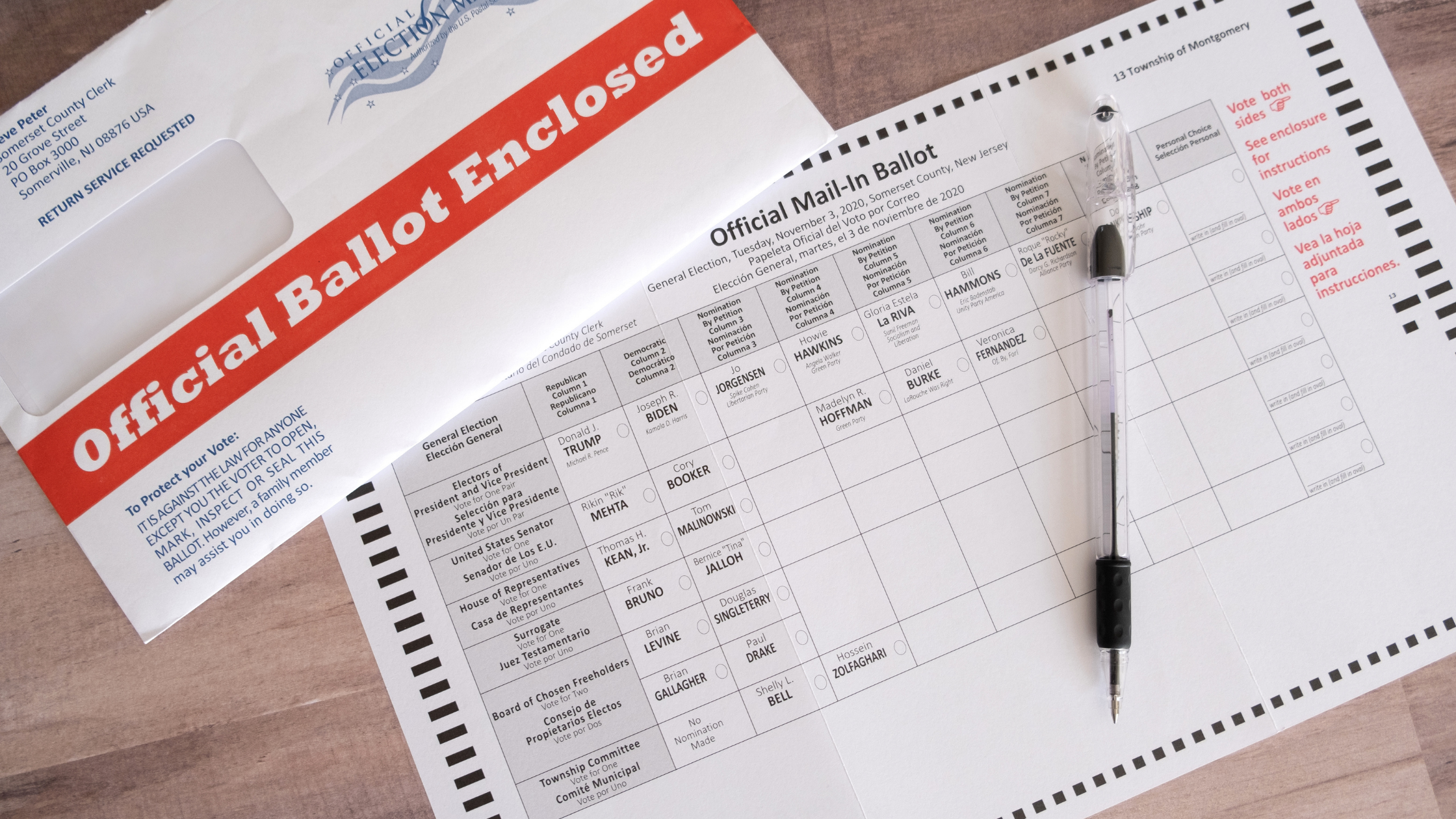
In Watson v. Republican National Committee, 609 U.S. ___ (2026), the U.S. Supreme Court held that ...
Supreme Court Rules Law Enforcement Accessing Location Data Constitutes Fourth Amendment Search
by DONALD SCARINCI on August 25, 2026
In Chatrie v. United States, 609 U.S. ___ (2026), the U.S. Supreme Court held that law enforcement ...