Menu


Hot-Topics
March 12, 2026 | SCOTUS Rejects Delaware Affidavit of Merit Requirement
Tag: Search and seizure
The U.S. Supreme Court’s Case Docket For February
The U.S. Supreme Court returns from recess on February 22, 2016 without Justice Antonin Scalia. Below is a brief summary of the Supreme Court’s Case Docket that the Eight justices will consider this month. Kingdomware Technologies, In...
Mapp v. Ohio: Use of Evidence Under the 4th Amendment
In Mapp v. Ohio, 367 US 643 (1961), the U.S. Supreme Court ruled that evidence obtained through a search in violation of the Fourth Amendment could not be used as evidence in a state criminal case. The decision relied on the doctrine of selective inc...
SCOTUS up to 47 cases for 2015-16 Term Docket
The Supreme Court (SCOTUS) kicked off its new term on October 5, 2015 and filled about 2/3 of its docket. In total, SCOTUS granted certiorari in thirteen new cases during its September 28 long conference, bringing the docket to 47. Last term th...
Riley v. California: Police Must Obtain Warrant to Search Cell Phones
In Riley v. California, the majority held that police officers must obtain a warrant The U.S. Supreme Court recently issued its most important privacy decision in four decades. In Riley v. California, the majority held that police officers must obta...

Fernandez v. California: Ruling Makes It Easier for Police to Search Your Home
Since returning from break, the U.S. Supreme Court justices have been hard at work. One of its most recent criminal decisions may impact the ability of the police to search your house, particularly if you don’t live alone. In Fernandez v. Califo...
Supreme Court Gives Police Latitude to Pursue Misdemeanor Suspect on Private Property
The October 2013 Term is in full swing with the U.S. Supreme Court issuing its first opinions. One of the first cases decided, Stanton v. Sims, involved whether police officers are authorized to pursue a fleeing suspect onto a homeowner’s private p...
Terry v. Ohio: The Birth of Stop and Frisk
A federal court judge recently held that New York City’s stop and frisk program runs afoul of the U.S. Constitution. In addition to finding that the practice disproportionately targeted black and Hispanics in violation of the Fourteenth Amendment, ...
Maryland v. King: Taking DNA Samples Through Mouth Swabs
A mouth swab will soon be as common as a mug shot. In a controversial 5-4 ruling, the U.S. Supreme Court ruled that taking a DNA sample during police booking for serious offenses is reasonable under the Fourth Amendment. The Supreme Court’s DNA ...
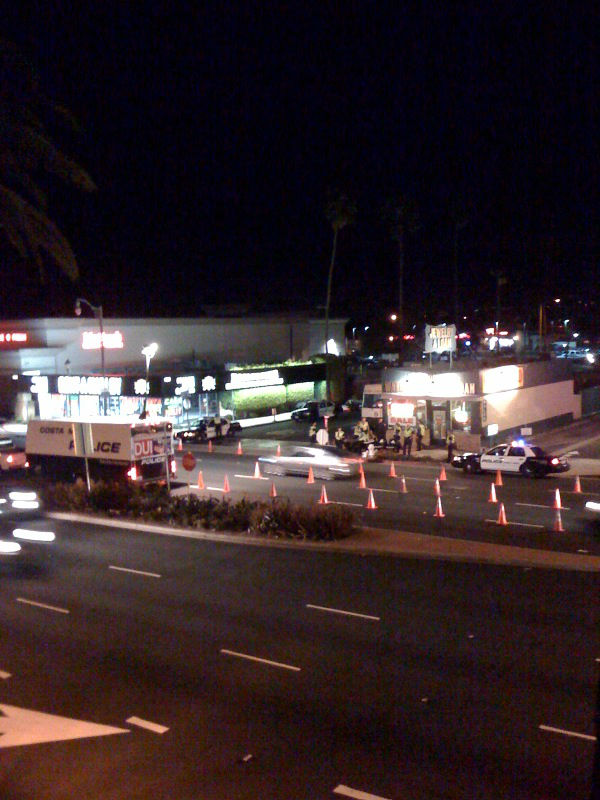
Missouri v. McNeely: Supreme Court Rules Warrant Required for DUI Blood Testing
In a closely watched case, the U.S. Supreme Court recently held that privacy interests trump law enforcement when it comes to forced blood draws in a drunk driving investigation. Though the justices could not agree on a bright-line rule, the majority...
Previous Articles
Supreme Court Holds Candidate Can Challenge Election Law Governing Vote Counting
by DONALD SCARINCI on March 6, 2026
In Bost v. Illinois State Board of Elections, 607 U.S. ___ (2026), the U.S. Supreme Court held that...
Supreme Court Hold Ex Post Facto Clause Applies to Criminal Restitution Statute
by DONALD SCARINCI on
In Ellingburg v. United States, 607 U.S. ____ (2026), the U.S. Supreme Court unanimously heldthat t...
SCOTUS Reaffirms Fourth Amendment Standard for Police Responding to Household Emergencies
by DONALD SCARINCI on February 19, 2026
In Case v. Montana, 607 U.S. ____ (2026), the U.S. Supreme Court confirmed thatthe Fourth Amendment...