

SCOTUS Rules Hawaii Concealed Carry Gun Law Violates Second Amendment
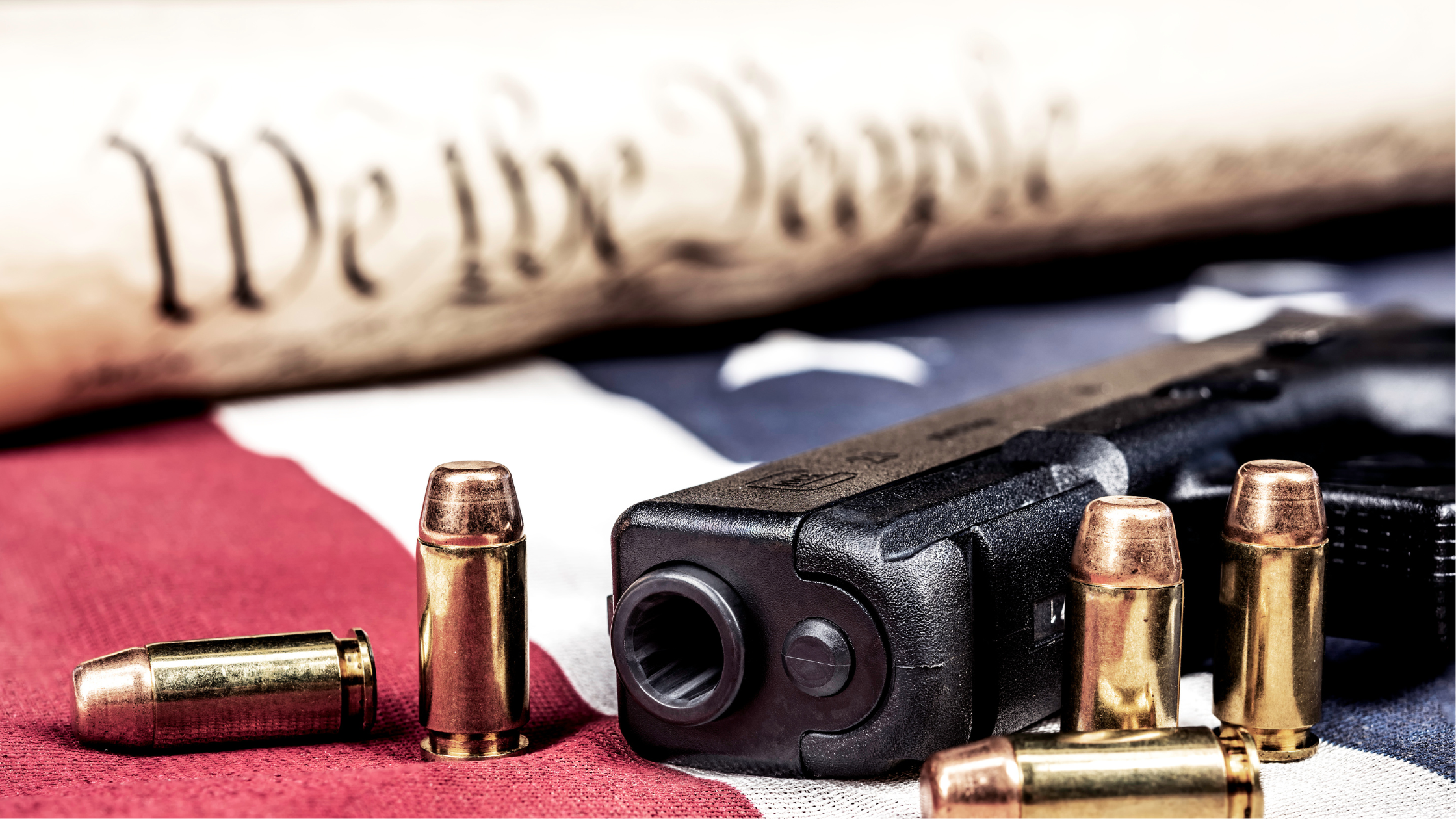
In Wolford v. Lopez, 609 U.S. ___ (2026), the U.S. Supreme Court held that Hawaii’s law prohibiting licensed concealed-carry permit holders from carrying handguns on private property open to the public without the property owner’s express authorization violates the Second and Fourteenth Amendments.
Facts of the Case
The case involves a legal challenge to a Hawaii law that makes it a crime for someone who has a concealed carry permit to carry a handgun on private property without the property owner’s affirmative permission. The lawgenerally prohibits licensed individuals from carrying a firearm, even if unloaded or inoperable, “on private property of another.” Certain categories of individuals, such as police officers, are exempt, but the ban otherwise applies unless “express authorization” has been given “by the owner, lessee, operator, or manager of the property,” Such authorization must take one of two forms: “clear and conspicuous signage” that confers such consent or “[u]nambiguous written or verbal authorization” to carry a firearm on the premises from “the owner, lessee, operator, or manager of the property” or an agent of such a person.
The State of Hawaii enacted the law in response to the Supreme Court’s decision in New York State Rifle & Pistol Association, Inc. v. Bruen, 597 U.S. 1, 33 (2022), in which the Court held that the Second and Fourteenth Amendments protect the right to carry handguns outside the home for self-defense. The Court further held that when a firearm regulation is challenged under the Second Amendment, the Government must show that the restriction “is consistent with the Nation’s historical tradition of firearm regulation.”
Petitioners—three residents of Maui County who possess concealed-carry permits and an organizational plaintiff with members who have such permits—filed suit in federal court seeking temporary and permanent injunctive relief, contending that the law at issue violates their constitutional rights. The District Court enjoined enforcement of the law as applied to private property open to the public, but the Ninth Circuit reversed that injunction. It held that a national tradition likely exists of prohibiting the carrying of firearms on private property without the owner’s oral or written consent. The challengers appealed to the Supreme Court, arguing that “[i]n holding the Second Amendment does not apply to private property open to the public, the Ninth Circuit’s decision renders illusory the right to carry in public.”
Supreme Court’s Decision
The Supreme Court reversed by a vote of 6-3. Justice Samuel Alito wrote on behalf of the majority, which included Chief Justice John Roberts and Justices Clarence Thomas, Brett Kavanaugh, Neil Gorsuch, and Amy Coney Barrett.
The majority first found that because the restrictions imposed by Hawaii’s challenged law fall within the plain text of the Second Amendment, the law is presumptively unconstitutional. “No party disputes that petitioners are among ‘the people’ protected by the Second Amendment or that they seek to ‘bear’ ‘Arms,’” Justice Alito wrote. “Therefore, ‘the plain text of the Second Amendment protects’ what petitioners want to do: carry handguns for self-defense.” Justice Alito further emphasized that the law “severely hampers the ability of law-abiding citizens to exercise the right Bruen recognized as they go about their daily lives.”
Applying Bruen, the majority went on to find that Hawaii’s proffered historical analogues do not support the constitutionality of its new default rule. In doing so, the majority expressly rejected Hawaii’s argument that “whatever the situation in other parts of the country,in Hawaii, opening private property to the public” does not give permission to bring a gun onto that property. As Justice Alito explained, the Second Amendment has the same meaning throughout the United States. “Merely local attitudes can neither shrink nor inflate the meaning of fundamental Bill of Rights guarantees that apply to the States through the Fourteenth Amendment,” he wrote.
The majority also rejected that Hawaii’s argument that analogous colonial and early state laws support the constitutionality of the State’s new law. According to the Couty, the old laws, are vastly different from Hawaii’s new default rule, particularly because they consist almost entirely of laws that prohibited unauthorized hunting of deer or small game on someone else’s private property. As Justice Alito emphasized, the law did not affect “the Second Amendment’s central objective” of “protecting the fundamental right to self-defense,” but rather aimed to “prevent the distinctive harms and risks associated with unauthorized hunting.”
Dissent
Justice Ketanji Brown Jackson wrote a dissenting opinion, joined by Justice Sonia Sotomayor. Justice Jackson argued that Hawaii’s law “fairly applies a first principle of property law—the right to exclude—and does no harm to the Second Amendment.” She further maintained that even if the Second Amendment is implicated, the law satisfies Bruen because the early laws cited by the State of Hawaii demonstrate a tradition of state regulation within which Hawaii’s law fits comfortably. As Justice Jackson explained, “these laws required consent for armed entry onto private property open to the public. And like Hawaii’s, they did so to protect property owners’ rights and to prevent the harms that generally accompanied unauthorized armed entry onto private land.”
In criticizing the majority’s decision, Justice Jackson argued that “the Court has now manipulated Bruen into a free-for-all that lets the Judiciary thwart the will of legislatures by privileging access to firearms above all else.” She added: “Today’s decision makes one thing clear: The Court’s objective is protecting guns, not consistently preserving any principle of law.”
Previous Articles
SCOTUS Upholds Mississippi Mail-In Ballot Law
by DONALD SCARINCI on August 31, 2026
In Watson v. Republican National Committee, 609 U.S. ___ (2026), the U.S. Supreme Court held that ...
Supreme Court Rules Law Enforcement Accessing Location Data Constitutes Fourth Amendment Search
by DONALD SCARINCI on August 25, 2026
In Chatrie v. United States, 609 U.S. ___ (2026), the U.S. Supreme Court held that law enforcement ...
SCOTUS Rules States Can Ban Transgender Athletes from Female Sports
by DONALD SCARINCI on August 17, 2026
In West Virginia v. B.P.J., 609 U.S. ___ (2026), the U.S. Supreme Court held that Title IX allows s...