

SCOTUS Upholds Mississippi Mail-In Ballot Law
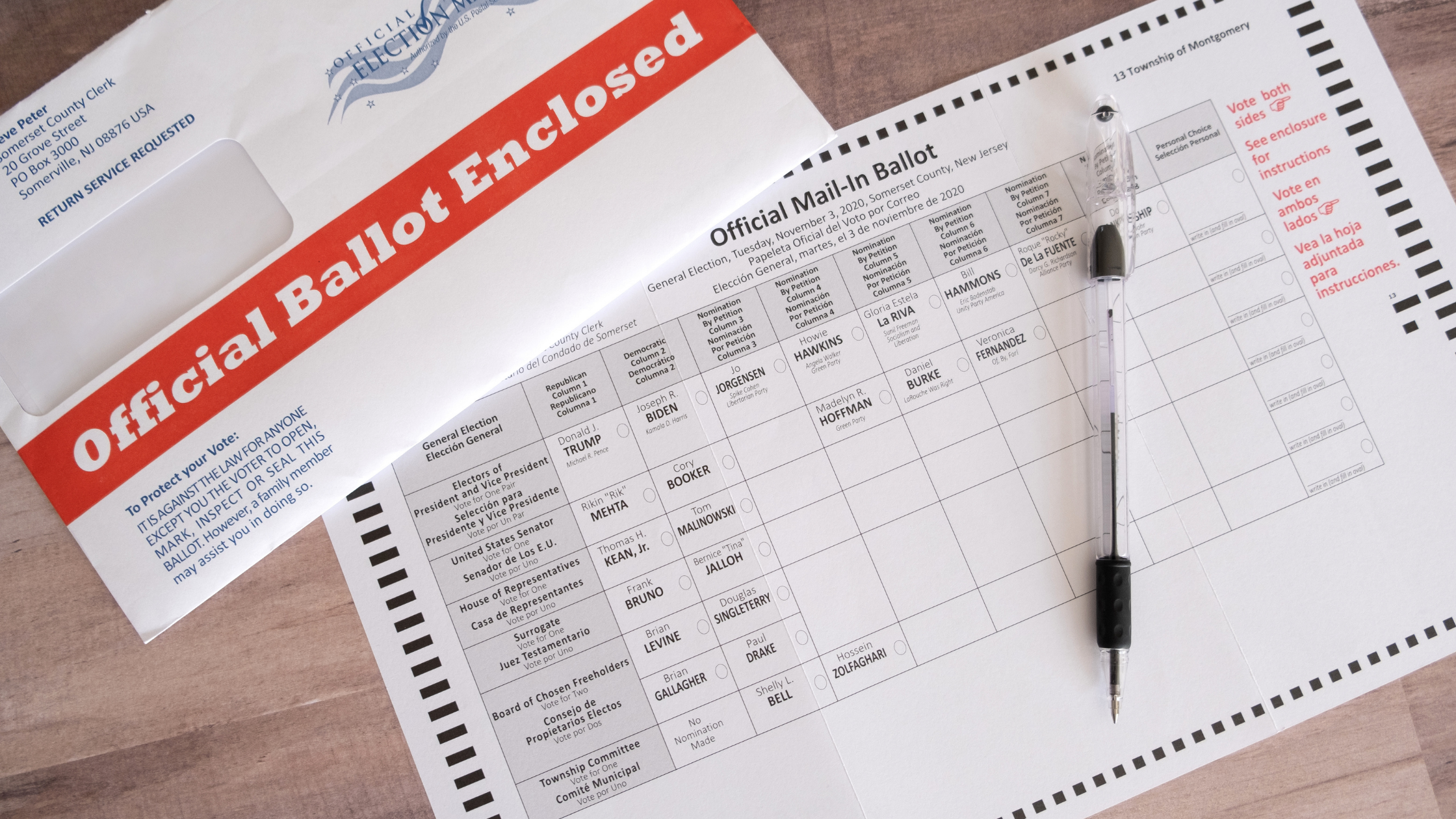
In Watson v. Republican National Committee, 609 U.S. ___ (2026), the U.S. Supreme Court held that federal election-day statutes do not prevent Mississippi from counting absentee ballots postmarked by Election Day but received up to five days thereafter. According to the five-member majority, nothing in the statutes requires ballots to be received by Election Day.
Facts of the Case
The Constitution’s Elections Clause empowers state legislatures to “prescrib[e]” the “Times, Places and Manner of holding” congressional elections, while also allowing Congress to override such laws. Similarly, Article II provides that State legislatures may “direct” the “Manner” of appointing “Electors” to vote for President and Vice President. But “Congress may determine the Time of chusing the Electors, and the Day on which they shall give their Votes.”
The federal election-day statutes set the day for the “election” of Representatives, Senators, and the President on a Tuesday in November. Mississippi permits certain residents, such as college students away from home and senior citizens, to vote in federal elections by absentee ballot.
Mississippi is also one of roughly 30 States that count at least some absentee ballots mailed by election day but received afterward. Absentee voters in Mississippi may dispatch their ballots by mail or common carrier, and all absentee ballots must be “postmarked on or before the date of the election and received by the registrar no more than five (5) business days after the election.”
In 2024, the Republican National Committee, the Mississippi Republican Party, and various individuals sued the Mississippi secretary of state and several election officials, contending that federal law prevents Mississippi from counting absentee ballots received after election day. According to plaintiffs, the election-day statutes use the word “election” to refer to two acts—ballot casting and ballot receipt—so by setting the day for the “election,” these statutes set the deadline for both.
The Libertarian Party of Mississippi filed a similar suit, and the District Court consolidated the cases, and then granted summary judgment to Mississippi. The Fifth Circuit reversed, holding that Mississippi’s statute is preempted because the federal election-day statutes require ballots to be received by election day.
Supreme Court’s Decision
The Supreme Court reversed by a vote of 5-4. Chief Justice John Roberts and Justices Sonia Sotomayor, Elena Kagan, and Ketanji Brown Jackson joined Justice Amy Coney Barrett’s majority opinion.
“In sum, the election-day statutes require the electorate’s choice to be made on election day. That occurs so long as election day is the deadline for individuals to vote—as it is in Mississippi,” Justice Barrett wrote. “But the election-day statutes do not set a deadline for ballot receipt, so they do not prevent Mississippi from counting ballots postmarked before election day yet received afterward.”
In reaching its decision, the majority concluded that federal election-day statutes do not preempt Mississippi’s law because the defining element of an “election” has always been the electorate’s choice of candidate.As Justice Barrett explained:
The electorate’s choice is made when voting is complete, not when ballots are received. The most recent amendment to the Presidential election-day statute bears this out. In 2022, Congress inserted the phrase “election day” into that statute and marked that day as a specific Tuesday. It then created an exception: When States “modif[y] the period of voting” in response to certain force majeure events, the term “election day” shall “include the modified period of voting.” (emphasis added). That Congress defined “election day” with reference to “voting” indicates that “voting” is the act governed by the statute.
According to the majority, this interpretation is consistent with the Constitution’s requirements for the electoral college. The Constitution requires the “Day on which [the electors] shall give their Votes” to be “the same throughout the United States,” Art. II, §1, cl. 4, but says nothing about the day for receipt. As Justice Barrett further stressed, federal election laws “do not set a deadline for ballot receipt” and therefore “do not prevent Mississippi from counting ballots postmarked before election day yet received afterward.”
The majority rejected the plaintiffs’ argument that the election-day statutes require ballots to be received by election day, emphasizing that it relies heavily on historical practice, precedent, and policy. “At bottom, plaintiffs’ theory is that because we are governed by 19th-century election-day laws, we are also governed by 19th-century voting practices,” Justice Barrett wrote. “Carried to its logical conclusion, this theory would call into question the way modern elections work.”
Finally, the majority emphasized that it was deciding a very narrow question. “The question today is not whether requiring ballots to be received by election day is a good or bad idea; the question is whether the idea has made its way into the United States Code,” Justice Barrett wrote.
Dissent
Justice Samuel Alito wrote a dissenting opinion, which was joined in full by Justices Clarence Thomas and Neil Gorsuch. Justice Brett Kavanaugh joined in part. According to Justice Alito, “[F]rom this Nation’s founding until the last few decades of the 20th century—a period that spans the enactment of all three election-day statutes—having an ‘election’ on a particular day meant completing ballot collection on that day.”
“Allowing absentee ballots to pour in over the days and weeks after election day, by which point preliminary election returns are being publicly reported, creates greater opportunity for fraud and risks further undermining the public’s confidence in election integrity,” he further argued.
Previous Articles
Supreme Court Clarifies Constitutionality of Tax Foreclosure Sales
by DONALD SCARINCI on September 28, 2026
In Pung v. Isabella County, 609 U.S. ____ (2026), the U.S. Supreme Court held that the proper basel...
Supreme Court Closes Door on Judicially Created Claims Under Alien Tort Statute
by DONALD SCARINCI on September 21, 2026
In Cisco Systems, Inc. v. Doe, 609 U.S. ___ (2026), the U.S. Supreme Court ruled that federal cour...
US Supreme Court Upholds “Metering” Policy for Asylum Seekers
by DONALD SCARINCI on September 15, 2026
In Mullin v. Al Otro Lado, 609 U.S. ___ (2026), the U.S. Supreme Court held that an alien standing ...