Menu


Hot-Topics
February 5, 2026 | SCOTUS Decision in Bowe v. United States Is First of the 2026 Term
Author: DONALD SCARINCI

Downes v. Bidwell: Does the Constitution Follow the Flag?
Downes v. Bidwell: Does the Constitution Follow the Flag? In Downes v. Bidwell, 182 U.S. 244 (1901), the U.S. Supreme Court held that the rights and protections of the Constitution do not automatically apply to U.S. territories. The case is one of t...

Welch v. United States: Landmark Sentencing Decision Must Be Applied Retroactively
Welch v. United States: Landmark Sentencing Decision Must Be Applied Retroactively On April 18, 2016, the U.S. Supreme Court held that its landmark criminal sentencing decision in Johnson v. United States must be applied retroactively. The justices ...
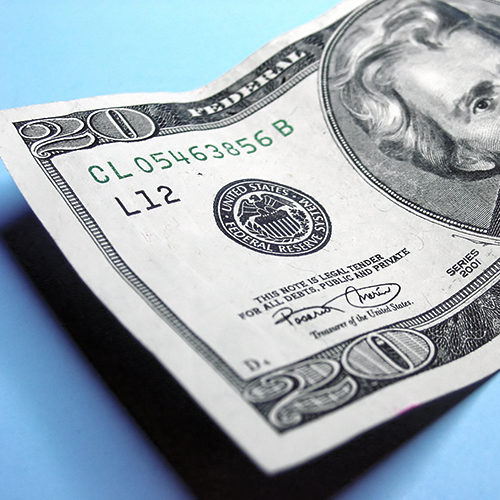
The Sixteenth Amendment: The Federal Income Tax
The Sixteenth Amendment: The Federal Income Tax The Sixteenth Amendment to the U.S. Constitution eliminated the requirement that federal taxes be levied on individuals in proportion with the populations of their states. The amendment cleared the way...

Bank of the United States v Deveaux: The Citizenship of Corporations
Bank of the United States v Deveaux: The Citizenship of Corporations In Bank of the United States v. Deveaux, 5 Cranch 61 (1809), the U.S. Supreme Court first considered the citizenship of corporations for the purposes of diversity jurisdiction. The...
Franchise Tax Board of California v Hyatt: Applying the Full Faith and Credit Clause
Franchise Tax Board of California v Hyatt: Applying the Full Faith and Credit Clause On April 19, 2016, the Supreme Court reached another 4-4 tie. In Franchise Tax Board of California v Hyatt, the justices could not decide whether to overrule Nevada...

Ware v Hylton: Supreme Court Power to Invalidate State Laws
Ware v Hylton: Supreme Court Power to Invalidate State Laws In Ware v. Hylton, 3 U.S. (3 Dall.) 199 (1796), the U.S. Supreme Court held that the federal courts are authorized to determine the constitutionality of state laws. The Court subsequently h...
Heffernan v City of Paterson: SCOTUS Examines Employee Rights under the First Amendment
Heffernan v City of Patterson In Heffernan v.City of Patterson, the U.S. Supreme Court held that when an employer demotes an employee out of a desire to prevent the worker from engaging in protected political activity, the employee is entitled to ch...
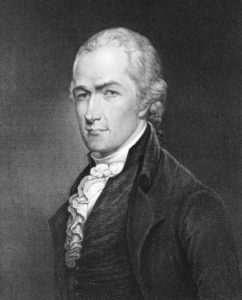
Hylton v United States: Apportionment of Direct Taxes
In Hylton v United States, the U.S. Supreme Court upheld an annual tax on carriages was a valid exercise of Congress’ constitutional authority. It specifically ruled that the tax was not a direct tax that required compliance with Article 1’s ...

Bank Markazi v. Peterson: Court Rules for Terrorism Victims in Article III Case
In Bank Markazi v. Peterson, 578 U. S. ____ (2016), the U.S. Supreme Court held that Section 8772 of the Iran Threat Reduction and Syria Human Rights Act of 2012 does not violate the separation of powers. Congress enacted the statute to ensure that a...

Selective Draft Law Cases Hold Conscription Is Constitutional
In Arver v. United States, 245 U.S. 366 (1918), the U.S. Supreme Court held that Congress was authorized under the Constitution to compel military service pursuant to the Selective Service Act of 1917. The consolidated cases are also known as the...
Previous Articles
SCOTUS Rules State Can’t Immunize Parties from Federal Civil Liability
by DONALD SCARINCI on January 29, 2026
In John Doe v. Dynamic Physical Therapy, LLC, 607 U.S. ____ (2025) the U.S. Supreme Court held that...
Supreme Court to Address Racial Discrimination in Jury Selection
by DONALD SCARINCI on
While the U.S. Supreme Court has concluded oral arguments for the year, it continues to add cases t...
Supreme Court Halts Deployment of National Guard to Chicago
by DONALD SCARINCI on
In Trump v. Illinois, 607 U.S. ____ (2025), the U.S. Supreme Court refused to stay a district court...