
Constitutional Law Reporter
Award
Menu
  • Home
  • US Constitution
  • Supreme Court Cases
  • Justices
    • Chief Supreme Court Justices
    • Current Supreme Court Justices
    • Past US Supreme Court Justices
  • American Biographies
    • General
    • Presidents
    • Vice-Presidents
    • First Ladies
    • Signers of the U.S. Constitution
    • Signers of the Declaration of Independence
    • Delegates of the U.S. Constitution
    • Misc – Great American Bios
  • Articles
    • Current Cases
    • Historical Cases
    • Impeachment
  • Videos
  • Links
Hot-Topics

April 28, 2026 | Supreme Court Rules ISP Not Liable for Copyright Infringement

Category: Homepage post

Helsinn Healthcare S.A. v Teva Pharmaceuticals USA Inc., 586 U. S. ____ (2019)

Unanimous Court Rules Confidential Sales Can Invalidate Patent as Prior Art

In Helsinn Healthcare S.A. v Teva Pharmaceuticals USA Inc., 586 U. S. ____ (2019), the U.S. Supreme Court unanimously held that a commercial sale to a third party who is required to keep the invention confidential may place the invention “on sale...

Read More
Murdock v Pennsylvania and the Free Exercise Clause

Murdock v Pennsylvania and the Free Exercise Clause

In Murdock v Pennsylvania, 319 U.S. 105 (1943), the U.S. Supreme Court struck down a municipal ordinance that taxed the door-to-door sale of religious merchandise. According to the divided Court, such a tax violated the First Amendment’s Free Exer...

Read More
Blockburger v United States Established “Same Elements” Double Jeopardy Test

Blockburger v United States Established “Same Elements” Double Jeopardy Test

In Blockburger v United States, 284 U.S. 299 (1932), the U.S. Supreme Court clarified when two offenses are the same for purposes of Fifth Amendment’s Double Jeopardy Clause. Under the “same elements” test, a defendant may be convicted of two ...

Read More
Stokeling v United States_ Divided Court Rules Necklace Snatching Is Violent Felony Under ACCA

Stokeling v United States: Divided Court Rules Necklace Snatching Is Violent Felony Under ACCA

In Stokeling v United States, 586 U.S. ____ (2019), the U.S. Supreme Court held by a vote of 5-4 that the Armed Career Criminal Act’s (ACCA) elements clause encompasses a robbery offense that, like Florida’s law, requires the criminal to overcom...

Read More
Cohen v California — Freedom of Expression Protects Offensive Words

Cohen v California — Freedom of Expression Protects Offensive Words

In Cohen v California, 403 U.S. 15 (1971), the U.S. Supreme Court held that the First Amendment prohibits states from criminalizing the public display of a single four-letter expletive, without a more specific and compelling reason th...

Read More
SCOTUS (Minus Justice Ginsburg) Hears Arguments in Six Cases 1-14-19

SCOTUS (Minus Justice Ginsburg) Hears Oral Arguments in Six Cases

Justice Ruth Bader Ginsburg missed oral arguments this week as she recovers from surgery to remove cancerous growths from her lungs. She will, however, still participate in the cases by reading the briefs and transcripts of oral arguments. The re...

Read More
US Supreme Court Kicks off 2019 with Oral Arguments in Five Cases

US Supreme Court Kicks off 2019 with Oral Arguments in Five Cases

The U.S. Supreme Court had a busy first week of the year as the justices returned to the bench to kick off 2019. The week’s oral arguments included two high-profile copyright cases. Below is a brief summary of issues before the Court last week:...

Read More
United States v Stitt Clarifies Burglary Under Armed Career Criminal Act

United States v Stitt Clarifies Burglary Under Armed Career Criminal Act

In United States v Stitt, decided on December 10, 2018, the U.S. Supreme Court held that the term “burglary,” as used in the federal Armed Career Criminal Act (ACCA), includes the burglary of any “structure or vehicle that has been adapted or ...

Read More
SCOTUS to Take Up Rare 21st Amendment Case in January 2019

SCOTUS to Take Up Rare 21st Amendment Case

When they return to the bench in January, the justices of the U.S. Supreme Court will consider their first case involving the 21st Amendment in more than a decade. Tennessee Wine and Spirits Retailers Association v. Clayton Byrd involves the co...

Read More
  1. 1
  2. ...
  3. 26
  4. 27
  5. 28
  6. 29
  7. 30
  8. 31
  9. 32
  10. 33
  11. 34
  12. 35
  13. 36
  14. 37
  15. 38
  16. 39
  17. 40
  18. 41
  19. 42
  20. 43
  21. 44
  22. 45
  23. 46
  24. ...
  25. 53

Previous Articles

Unanimous Supreme Court Rules Conviction Does Not Bar Prospective Constitutional Challenge
by DONALD SCARINCI on April 22, 2026
Unanimous Supreme Court Rules Conviction Does Not Bar Prospective Constitutional Challenge

In Olivier v. City of Brandon, Mississippi, 607 U.S. ____ (2026), the U.S. Supreme Court held that...

Read More
Supreme Court Clarifies Standard of Review for Asylum Decisions
by DONALD SCARINCI on April 17, 2026
Supreme Court Clarifies Standard of Review for Asylum Decisions

In Urias-Orellana v. Bondi, 607 U.S. ____ (2026), the U.S. Supreme Court held that courts of appeal...

Read More
SCOTUS Rules Court Can Restrict Attorney-Client Discussions During Overnight Recess
by DONALD SCARINCI on April 15, 2026
SCOTUS Rules Court Can Restrict Attorney-Client Discussions During Overnight Recess

In Villarreal v. Texas,607 U.S. ____ (2026), the U.S. Supreme Court unanimously held that a qualifi...

Read More
All Posts

The Amendments

  • Amendment1
    • Establishment ClauseFree Exercise Clause
    • Freedom of Speech
    • Freedoms of Press
    • Freedom of Assembly, and Petitition
    Read More
  • Amendment2
    • The Right to Bear Arms
    Read More
  • Amendment4
    • Unreasonable Searches and Seizures
    Read More
  • Amendment5
    • Due Process
    • Eminent Domain
    • Rights of Criminal Defendants
    Read More

Preamble to the Bill of Rights

Congress of the United States begun and held at the City of New-York, on Wednesday the fourth of March, one thousand seven hundred and eighty nine.

THE Conventions of a number of the States, having at the time of their adopting the Constitution, expressed a desire, in order to prevent misconstruction or abuse of its powers, that further declaratory and restrictive clauses should be added: And as extending the ground of public confidence in the Government, will best ensure the beneficent ends of its institution.

Read More

More Recent Posts

  • Supreme Court Clarifies Applicability of First Step Act to Vacated Sentences
  • SCOTUS Rules E-Cigarette Retailers Can Challenge FDA Order in Fifth Circuit
  • Supreme Court Expands Judicial Review of Agency Actions
  • Supreme Court Pauses Order Reinstating CPSC Commissioners

Constitutional Law Reporter Twitter

A Twitter List by S_H_Law

Constitutional Law Reporter RSS

donald scarinci constitutional law attorney

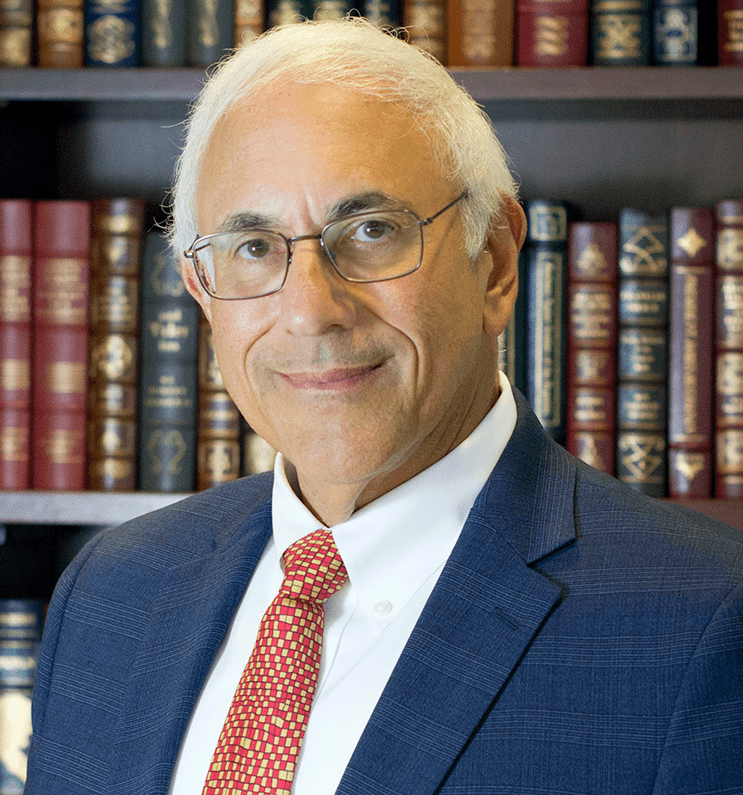
Editor

Donald Scarinci

Managing Partner

Scarinci Hollenbeck

(201) 806-3364

Awards


Follow me

© 2018 Scarinci Hollenbeck, LLC. All rights reserved.

Prior results do not guarantee a similar outcome. Attorney Advertising