Menu


Hot-Topics
October 12, 2026 | Supreme Court Rules Prison Officials Can’t Face RLUIPA Suit
Tag: Donald Scarinci
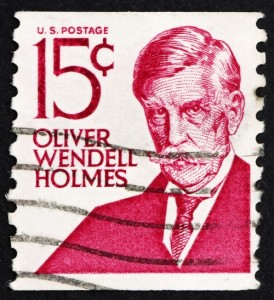
Abrams v. United States: The Dissent that Shaped Free Speech
Justice Oliver Wendell Holmes’ dissent in Abrams v. United States 250 U.S. 616 (1919) is widely regarded as one of the most famous dissents in the history of the U.S. Supreme Court. It sowed the seeds for the modern interpretation of freedom of...

Furman v. Georgia: The Constitutionality of the Death Penalty
In Furman v. Georgia, 408 U.S. 238 (1972), a divided U.S. Supreme Court held that the death penalty could violate the Eighth Amendment’s prohibition on cruel and unusual punishment if not imposed fairly. The decision imposed a brief moratorium ...
U.S. v. Carolene Products Company: The Importance of Footnotes
In United States v. Carolene Products Company, 304 U.S. 144 (1938), the U.S. Supreme Court upheld the validity of an economic regulation passed by Congress pursuant to the Commerce Clause. However, the case is more famous for “Footnote Four,” ...
EEOC v. Abercrombie: Religious Rights in the Workplace
On June 1, 2015, the U.S. Supreme Court, in EEOC v. Abercrombie, held that an employer could be held liable for not being able to accommodate a religious practice under Title VII of the Civil Rights Act of 1964, even though the employee or job appli...
Miranda vs Arizona: The Bedrock of Criminal Law
Nearly 50 years later, the U.S. Supreme Court’s landmark decision in Miranda vs Arizona, 384 U.S. 436 (1966), remains one of the Court’s most influential Fifth Amendment rulings. By a vote of 5-4, the majority held that in Miranda vs Arizona ...
Johnson v. M’Intosh: The Power to Grant Land
In Johnson v. M’Intosh, 21 U.S. 543 (1823), the U.S. Supreme Court addressed whether Native Americans had the power to give, and of private individuals to receive, title to land. The justices ultimately answered, in the case of Johnson v. M'Into...

City of Los Angeles v. Patel: Court Mandates Pre-Clearance Review
On June 22, 2015, the U.S. Supreme Court struck down a City of Los Angeles ordinance that required hotel operators to allow law enforcement to inspect guest registries without obtaining a warrant. The 5-4 majority in City of Los Angeles v. Patel, 57...
Dartmouth College v. Woodward: The Contracts Clause
In Dartmouth College v. Woodward, 17 U.S. 518 (1819), the U.S. Supreme Court held that the U.S. Constitution’s Contracts Clause prohibited state legislatures from interfering with individual property rights. Accordingly, the Court invalidated a ...
Martin v. Hunter’s Lessee: The Supreme Court’s Authority Over State Courts
In Martin v. Hunter’s Lessee, 14 U.S. 304 (1816), the U.S. Supreme Court first asserted its authority to overrule a state court decision regarding an issue of federal law. The Court’s landmark decision was rooted in the Court’s appellate jur...

The Fourteenth Amendment and the Slaughterhouse Cases
The U.S. Supreme Court first reviewed the Fourteenth Amendment to the U.S. Constitution in the Slaughter-House Cases, 83 U.S. 36 (1873). In a 5-4 decision, the majority adopted a narrow construction of the Amendment’s Privileges and Immuniti...
Previous Articles
Supreme Court Clarifies Constitutionality of Tax Foreclosure Sales
by DONALD SCARINCI on September 28, 2026
In Pung v. Isabella County, 609 U.S. ____ (2026), the U.S. Supreme Court held that the proper basel...
Supreme Court Closes Door on Judicially Created Claims Under Alien Tort Statute
by DONALD SCARINCI on September 21, 2026
In Cisco Systems, Inc. v. Doe, 609 U.S. ___ (2026), the U.S. Supreme Court ruled that federal cour...
US Supreme Court Upholds “Metering” Policy for Asylum Seekers
by DONALD SCARINCI on September 15, 2026
In Mullin v. Al Otro Lado, 609 U.S. ___ (2026), the U.S. Supreme Court held that an alien standing ...